


BODY SURGERY
Tummy Tuck in Valencia
The Ultimate Guide to Post-Bariatric Surgery and Diastasis Recti in Valencia, with Dr. Alberto Sánchez García
If you are looking for the best option for a tummy tuck in Valencia, you have come to the right place. At Alsaga Plastic Surgery, Dr. Alberto Sánchez García and his team are leaders in body contouring. This comprehensive guide is designed both for patients from Valencia and the Valencian Community, as well as for those visiting us from other areas of Spain (mainly Castellón, Alicante, Cuenca, Teruel, and Albacete) and abroad, with the goal of offering the most detailed, transparent, and rigorous information about abdominal surgery.
If you are looking for the best plastic surgeon in Valencia for an abdominoplasty, this information will help you make an informed decision.
Throughout this extensive document, we will cover everything from basic anatomical concepts to the most advanced technical details of the procedure, culminating in the most frequently asked questions our patients ask us during consultations.
Introduction to Abdominoplasty (Tummy Tuck)
By Dr. Alberto Sánchez García, your plastic surgeon in Valencia.
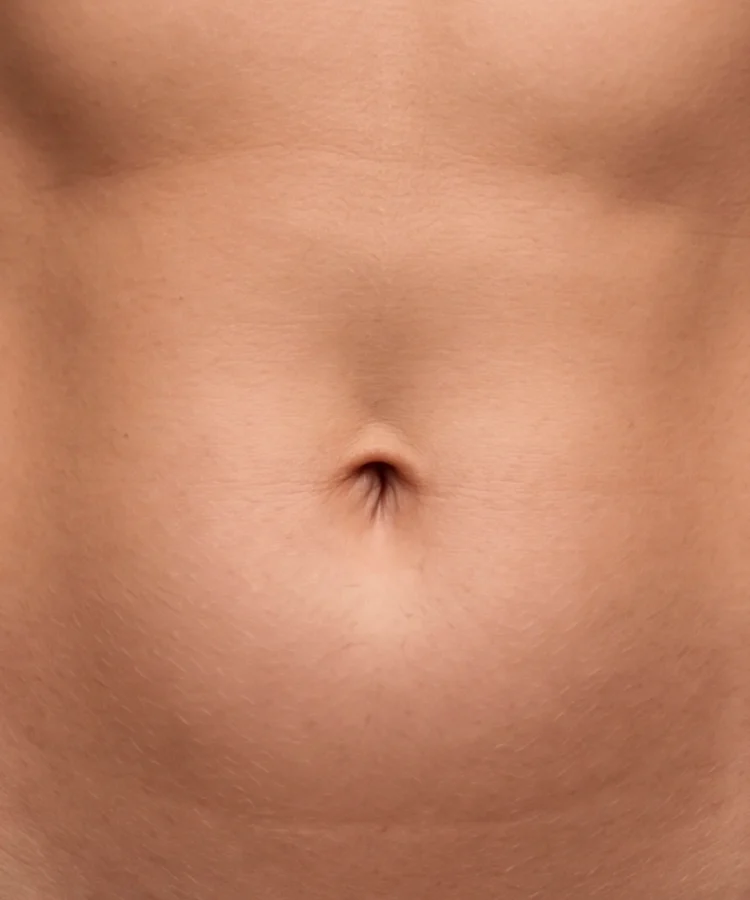
Abdominoplasty, medically known as an abdominal dermolipectomy, is a major surgical procedure designed to remove excess skin and fat from the middle and lower abdomen, while simultaneously repositioning and tightening the muscles of the abdominal wall (plication of the rectus muscles).
Unlike liposuction, which only extracts subcutaneous fat, a tummy tuck addresses the three components that cause a prominent or sagging abdomen:
- Inelastic skin: Removes the skin apron and stretch marks located below the belly button.
- Localized fat: Extracts adipose tissue resistant to diet and exercise.
- Muscle laxity: Repairs diastasis recti (muscle separation) of the abdominal muscles, creating a kind of “internal corset.”
At Alsaga Plastic Surgery, we understand that the goal is not just to flatten the stomach, but to sculpt a harmonious contour, respecting the natural proportions of your body and achieving the most discreet scar possible.
Is this surgery for you? Indications for a tummy tuck in Valencia
A tummy tuck is not a treatment for obesity or a substitute for weight loss. It is strictly indicated for patients who are close to their ideal weight (preferably with a Body Mass Index below 30) and present one or more of the following conditions:
Pregnancy aftermath
Women who, after one or more pregnancies, have developed diastasis recti (muscle separation) and skin flaccidity that does not improve with exercise.
Massive weight loss
Patients who have lost a significant amount of weight (whether through diet or bariatric surgery) and have excess hanging skin (abdominal apron).
Aging and genetics
People who, due to genetic factors or the passage of time, have lost skin elasticity in the abdomen and accumulate fat in the central area.
Relative or absolute contraindications:
- Women planning future pregnancies (it is advisable to postpone surgery, as a new pregnancy could reverse the muscle repair).
- Patients with morbid obesity (must lose weight before the procedure to minimize risks and optimize results).
- Active smokers (smoking severely compromises microcirculation, increasing the risk of skin necrosis; we require quitting smoking at least 4-6 weeks before and after).
Diastasis Recti
By Dr. Alberto Sánchez García, your plastic surgeon in Valencia.
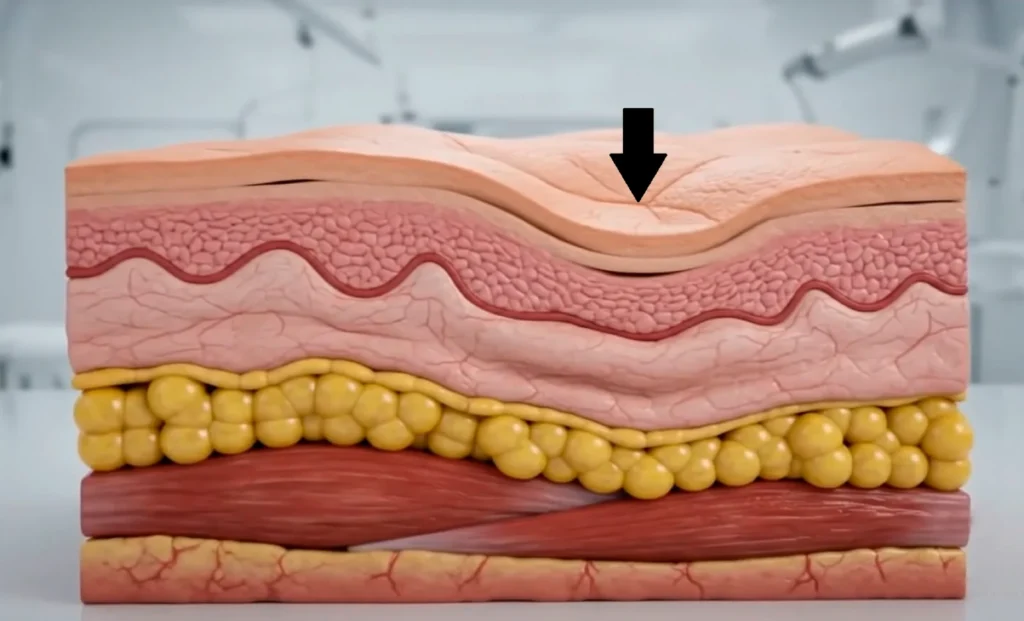
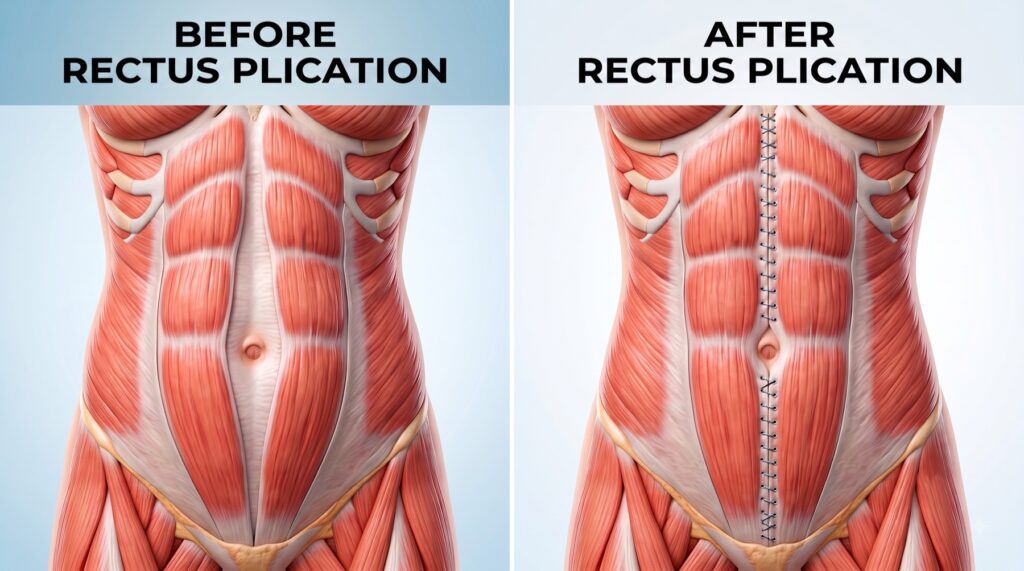
Diastasis recti is the separation of the two muscle bellies of the rectus abdominis muscle. This separation occurs along the linea alba (the central connective tissue) due to sustained intra-abdominal pressure, commonly during pregnancy.
When the muscles separate, the intra-abdominal content pushes outward, creating a bulging appearance, even in thin individuals. No physical exercise can reunite these muscles once the linea alba has been irreversibly stretched. The only definitive solution is the muscle plication we perform during a tummy tuck.
Types of Tummy Tucks and Approaches
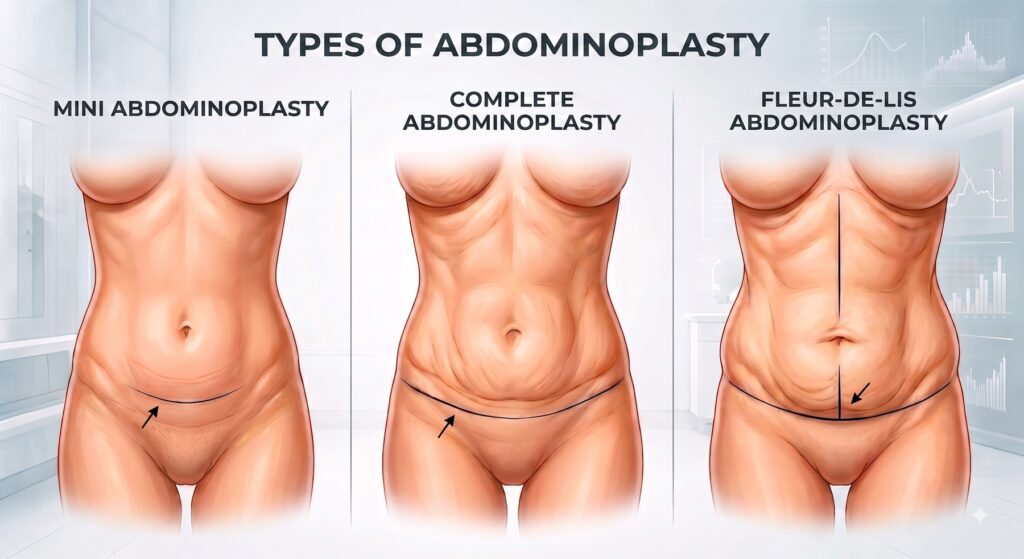
At Alsaga Plastic Surgery, Dr. Alberto Sánchez García evaluates each case individually to determine the optimal approach. There is no “one-size-fits-all” surgery:
Mini-Tummy Tuck
The incision is short (suprapubic, similar to a C-section). It is indicated in cases of mild flaccidity limited exclusively below the navel. It does not require umbilical transposition (although it is sometimes slightly detached internally).
Standard Tummy Tuck
The incision spans from hip to hip (but is low, hidden by underwear). It is indicated in cases of excess skin and muscle diastasis throughout the abdomen. It requires umbilical transposition (a new opening is created for the belly button).
Fleur-de-Lis Tummy Tuck
The incision is both horizontal (hip to hip) and vertical (from pubis to sternum). It is performed after massive weight loss with a large horizontal and vertical skin excess.
Lipoabdominoplasty: The Star Combination
Today, the most requested technique at our plastic surgery clinic in Valencia is the Lipoabdominoplasty. It consists of combining a standard tummy tuck with high-definition liposuction on the flanks, back, and the upper abdomen itself. This not only tightens the skin but also thins the adipose tissue of the abdomen and sculpts the waist, offering a much more aesthetic and harmonious three-dimensional result.
Design and Planning
This is done in the room or pre-operating area. Dr. Sánchez García makes the surgical markings while the patient is standing. The incision is strategically designed to be hidden under the type of underwear or bikini the patient usually wears.
Anesthesia and Incision
General anesthesia is administered. A suprapubic incision is made, and the skin and fat (the abdominal flap) are detached from the muscle wall, lifting it up to the rib cage.
Navel Release
A circular incision is made around the belly button, leaving it attached to its original stalk (attached to the muscle) while the surrounding skin is elevated.
Muscle Plication (The Internal Corset)
The rectus abdominis muscles are exposed. Using high-resistance sutures, the surgeon joins the muscles in the midline, closing the diastasis. This flattens the abdominal wall and significantly narrows the waist.
Resection of Excess Skin
The skin flap is pulled downwards firmly. All tissue that extends beyond the lower incision line is marked and removed (frequently eliminating infraumbilical stretch marks in the process).
Neo-umbilicoplasty
A small opening is made in the new skin that now covers the center of the abdomen, and the original navel is brought through, meticulously suturing it so it looks natural, slightly sunken, and without obvious scars.
Closure and Drains
The main incision is sutured in multiple layers to avoid tension on the external skin and ensure a fine scar. Depending on the case, temporary drainage tubes are placed to evacuate fluids.
Frequently Asked Questions (FAQ) about Tummy Tucks in Valencia
Answered by Dr. Alberto Sánchez García, your plastic surgeon in Valencia.
To consolidate our position as a leading plastic surgery clinic in Valencia, Dr. Alberto Sánchez García of Alsaga Plastic Surgery answers the most common questions patients have before post-bariatric surgery and tummy tucks in Valencia.
Is tummy tuck recovery painful?
The first 3 to 5 days are the most uncomfortable. The pain comes less from the skin incision and more from the muscle plication. It is perfectly managed with the painkiller and muscle relaxant regimen we prescribe.
How long will I have to walk hunched over?
Approximately 7 to 10 days. Walking slightly bent forward is crucial to avoid applying tension to the lower wound. You will gradually straighten up naturally.
When can I return to work after a tummy tuck in Valencia?
It depends on your job. For office work or remote work, 10 to 14 days are usually sufficient. If your job involves physical effort, lifting weights, or standing for long periods, you will need between 3 and 4 weeks.
How long should I wear the compression garment?
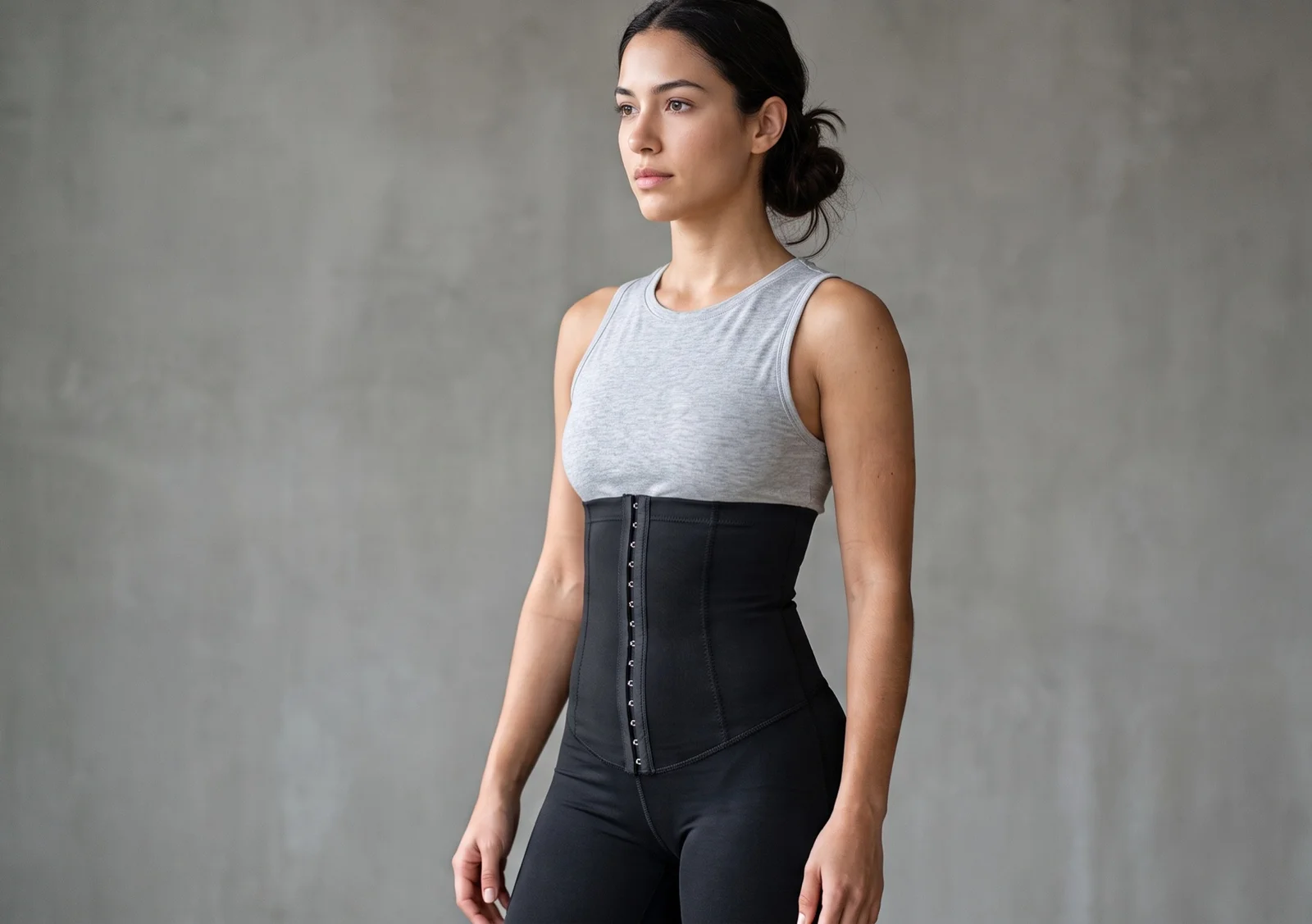
We recommend wearing a medical compression garment 24 hours a day for the first 4 weeks, and then only during the day or night for an additional 2 weeks. The garment reduces swelling, helps the skin adhere to the muscle, and provides support.
What are drains, and when are they removed?
They are small silicone tubes that prevent the accumulation of blood and serum under the skin (seroma). They are usually removed between the 3rd and 7th day at our clinic in Valencia, depending on the amount of fluid draining. Removing them doesn't hurt; it just creates a one-second vacuum sensation. In some cases, we do not use them.
When can I shower again?
Normally, we allow a quick shower (no immersive baths) after 48-72 hours, according to specific instructions regarding the waterproof dressings we use.
When can I exercise again?
Light walking is recommended from day one to prevent blood clots. Light cardiovascular exercise (stationary bike) can be resumed after a month. Core exercises, weightlifting, and high-intensity workouts should wait at least 2 months to protect the muscle sutures.
How long does it take for swelling to go down?
70% of the swelling subsides in the first 6 weeks. However, the abdomen may experience slight swelling fluctuations throughout the day for the first 4 to 6 months. The final result is assessed at one year.
What does a tummy tuck scar look like in Valencia?
It is horizontal and located at the lowest part of the abdomen, just above the pubic area. It is designed to be hidden under a standard bikini or underwear. There is also a small circular scar around the belly button.
Will the scar be noticeable long-term?
For the first 3 to 6 months, it will be red or pink and slightly hard. With proper care (silicone sheets, rosehip oil, sun protection), after a year it will become white, flat, and very unnoticeable.
Can stretch marks be removed with this surgery?
Yes, but only the stretch marks located on the skin that will be excised (typically, all the skin between the belly button and the pubis). Stretch marks above the navel will move down to the lower abdomen but will not disappear.
How will the belly button look? Will it look fake?
At Alsaga Plastic Surgery, we pay special attention to neo-umbilicoplasty. Dr. Sánchez García's technique aims to create a natural-looking navel, with a slight depression, hiding the scar inside the umbilical funnel to avoid a "coin-like" or artificial appearance.
Are the results permanent?
Yes, the removed skin and fat do not come back. The muscle repair is permanent. However, massive weight fluctuations (gaining and losing many pounds) or a new pregnancy can stretch the skin and muscles again, altering the result.
Will I lose weight with a tummy tuck?
A tummy tuck is not a weight-loss method. The excised tissue (skin and fat) usually weighs between 2 and 6 pounds (1 to 3 kilos). You will notice a drop in several pant sizes and a radical change in your silhouette, but the number on the scale will not drop dramatically.
What happens if I get pregnant after a tummy tuck?
Your body can adapt to pregnancy (the skin will stretch), but it will ruin the surgical results. The muscles will separate again, and the skin will lose firmness. We recommend undergoing this procedure only when you are certain you do not want more children.
Does a tummy tuck require hospital admission?
Yes. In Valencia, we perform this procedure with a one-night hospital stay. This allows us to administer intravenous pain medication, monitor you, and ensure your recovery begins in the safest way possible.
Is general or epidural anaesthesia used?
We use general anaesthesia for a standard tummy tuck. It ensures the muscle wall is completely relaxed, which is essential for performing a firm and secure plication, in addition to being more comfortable and safer for the patient.
What are the main risks of a tummy tuck?
Like any major surgery, there are general risks (infection, bleeding, anaesthesia reactions). Specific risks include seroma (fluid accumulation), skin edge necrosis (especially in smokers), hypertrophic scarring, and asymmetries. The risk of deep vein thrombosis (DVT) is minimized with early walking and proper prophylaxis.
Can I get a tummy tuck if I have an umbilical hernia?
Absolutely. In fact, it's the ideal time. During the abdominoplasty, we can repair umbilical hernias or eventrations while we repair the diastasis recti.
Can it be combined with a breast augmentation or breast lift (Mommy Makeover) in Valencia?
Yes, it is one of the most frequent combinations, known as a Mommy Makeover. Performing both surgeries in a single operation saves operating room costs and unifies the recovery period, although it extends the surgery time.
What is a seroma and how is it treated?
It is the accumulation of serum between the skin and muscle after drain removal. It is detected as a "squishy" or fluctuating area on the abdomen. It is easily treated in the office by performing painless punctures with a syringe to extract the fluid, or simply through compression garments.
Will I lose feeling in my stomach after surgery?
Yes. When the skin is detached from the muscle, small nerve endings are cut. You will notice numbness or a lack of sensation in the area between your belly button and the lower scar. This feeling usually returns gradually between 6 and 18 months, though sometimes a small area right above the scar may remain permanently slightly numb.
How much does a tummy tuck cost in Valencia?
The price varies depending on complexity (Mini vs. extended), operating room time, whether liposuction is included, and hospital stay days. At Alsaga Plastic Surgery, the quote is "all-inclusive" (fees, hospital, anaesthesia, garments, follow-ups). An in-person or online consultation is essential to provide an exact quote. Indicative average prices are:
- Abdominoplasty: €5,500–€7,600
- Mini-abdominoplasty: €4,000–€4,900
- Lipoabdominoplasty: €6,000–€8,500
- Circumferential abdominoplasty: €7,500–€9,900
- Abdominoplasty: €5,500–€7,600
- Mini-abdominoplasty: €4,000–€4,900
- Lipoabdominoplasty: €6,000–€8,500
- Circumferential abdominoplasty: €7,500–€9,900
Can I finance my tummy tuck at the Alsaga Clinic?
Yes, we collaborate with financial institutions to offer instalment payment plans, allowing you to pay for the surgery in comfortable monthly instalments tailored to your needs.
I am from outside Valencia (Alicante, Castellón, Teruel, Cuenca, or Albacete), what is the process?
Many of our patients travel to Valencia to be operated on by Dr. Sánchez García. We offer an initial online consultation (video call) to evaluate photographs and provide a surgical plan. If you decide to proceed, we will coordinate dates so you arrive 1-2 days prior for an in-person pre-op, and you will need to stay in Valencia for about 7-10 days after the surgery for early follow-ups and drain removal.
What pre-operative tests do I need?
We require a complete blood count, an electrocardiogram, and, for patients over a certain age or with medical history, a chest X-ray. Sometimes we request an ultrasound of the abdominal wall to precisely measure the degree of diastasis and rule out undiagnosed hernias.
Do I need to lose weight before a tummy tuck surgery in Valencia?
If you are above your ideal weight, we will ask you to lose weight before the procedure. Getting closer to your goal weight guarantees a much more spectacular result, reduces the risk of anaesthetic complications, and prevents the skin from sagging again if you decide to lose weight after the surgery.
I have a lot of pubic hair, does it affect the incision?
The incision is made very low, often within the pubic hair area. We will give you instructions on how to shave or trim the area in the days prior to surgery. Long-term, hair may grow over the scar, helping to conceal it even further.
How does a male tummy tuck differ from a female one?
Technically it is similar, but the aesthetic goal varies. In women, we aim for a wasp waist (curves), whereas in men we design a straighter, squarer, and more athletic abdomen, respecting natural male anatomy. Furthermore, men usually require more deep liposuction work on the flanks.
At Alsaga Plastic Surgery, our commitment is your safety, well-being, and achieving natural and harmonious results. Dr. Alberto Sánchez García is at your disposal in Valencia to answer any other questions you may have.
The medical information contained in this article is for guidance purposes and does not replace, under any circumstances, an in-person consultation with our plastic surgeon. Book an appointment and let’s talk.