



BREAST SURGERY
Breast Reduction in Valencia
The Ultimate Guide to a High-Quality Breast Reduction with Dr. Alberto Sánchez García
Reduction Mammoplasty as a Transformative Surgery
Reduction mammoplasty, or breast reduction surgery, is one of the procedures in aesthetic, reconstructive, and plastic surgery that offers the highest patient satisfaction rate. Unlike purely aesthetic interventions, breast reduction lies at the intersection of physical health, functional well-being, and body harmony.
Excess breast volume—medically known as mammary hypertrophy or gigantomastia when the excess exceeds 1,000 grams per breast—implies a continuous biomechanical burden that affects the spine axis, posture, and the skin of the inframammary fold, in addition to creating severe limitations in daily life and physical activity.
Below, we present the most complete, exhaustive, and detailed guide on breast reduction. If you are looking for the best plastic surgeon in Valencia for a breast reduction, this information will help you make an informed decision.
Dr. Alberto Sánchez García: Leading Plastic Surgeon in Valencia and the Levante Region
Located in the heart of Valencia (exclusively on Avenida de Francia), Dr. Alberto Sánchez García has established himself as a leading plastic surgeon specializing in reduction mammoplasty and breast reconstruction. With a career founded on surgical excellence, continuous training at the most prestigious international centers, and scientific rigor, Dr. Sánchez García cares for patients not only from Valencia but also from the entire Valencian Community (Castellón and Alicante) and neighboring provinces, such as Albacete, Cuenca and Teruel.
Our goal is to position ourselves not only as anatomical and surgical leaders but as the trusted medical team that patients would recommend to a friend or family member, due to our rigor and transparency.
Surgical Philosophy of Dr. Alberto Sánchez García:
“A breast reduction is not just about removing volume, but about sculpting a harmoniously shaped breast with natural projection and maximum vascular safety for the areola and nipple, guaranteeing immediate symptomatic relief and a predictable recovery.”
Patients visiting our clinic in Valencia find a detailed diagnosis, advanced surgical techniques (with optimized scarring), and close, honest postoperative care.
Indications and Ideal Candidates for Breast Reduction in Valencia
By Dr. Alberto Sánchez García, your plastic surgeon in Valencia.
Determining when a woman is a candidate for a breast reduction requires an individualized medical assessment that evaluates both clinical symptoms and the anatomical structure of the chest.
Physical Symptoms Derived from Mammary Hypertrophy
The excessive weight of the breasts creates constant downward and forward traction, altering the body’s center of gravity. Physical symptoms include:
Chronic back and neck pain
Recurrent pain in the dorsal and lumbar areas, and the neck, due to the overloading of the paravertebral muscles and trapezii.
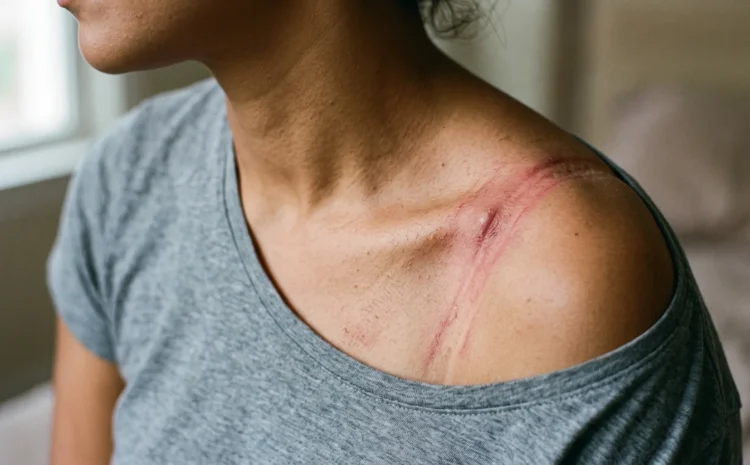
Shoulder grooving
Deep and painful indentations on the collarbones caused by the pressure of bra straps.
Intertrigo and submammary dermatitis
Recurrent fungal or bacterial infections, irritation, and skin maceration in the inframammary fold due to sweat accumulation and friction.
Paresthesia and numbness in arms and hands
Numbness in the upper extremities caused by the compression of brachial plexus branches due to shoulder traction.
Postural kyphosis
A tendency to hunch the back to hide breast size or relieve mechanical tension.
Psychological Repercussions and Quality of Life
Beyond physical pain, mammary hypertrophy directly affects the emotional and social life of the patient:
Difficulty practicing sports
High-impact activities like running, jumping, or swimming are uncomfortable or painful.
Problems finding suitable clothing
A significant discrepancy between bust size and hip/waist size.
Impact on self-esteem and body image
A feeling of unwanted hypervisibility from an early age (pubertal hypertrophy) or following changes after pregnancy and breastfeeding.
Medical Eligibility Criteria
To undergo a breast reduction in Valencia, the patient must meet the following requirements for her safety:
Complete breast development
Generally, it is recommended to wait until the breast tissue has fully developed (often around 18-20 years of age), except in severe cases of juvenile or virgin hypertrophy.
Weight stability (Suitable BMI)
It is advisable for the patient to have a stable Body Mass Index (BMI), preferably below 30 kg/m², since major subsequent weight fluctuations can alter the final result.
Optimal general health
Absence of uncontrolled systemic pathologies (uncontrolled diabetes, severe hypertension, or heart disease).
Controlled or ceased smoking habit
Smoking severely compromises skin microcirculation and increases the risk of areola-nipple complex necrosis and wound dehiscence. Patients must stop smoking at least 4 weeks before and 4 weeks after the surgery.
Realistic expectations
A clear understanding that the surgery involves scars in exchange for functional relief and an improved aesthetic shape.
Technical Details of Breast Reduction Surgery by Dr. Alberto Sánchez García, your plastic surgeon in Valencia.
Reduction mammoplasty is a highly specialized surgical technique that requires a deep understanding of the vascular and nervous anatomy of the breast.
Preoperative Assessment and Planning
At Alsaga Plastic Surgery (Dr. Alberto Sánchez García) in Valencia, the preoperative protocol includes:
- Complete blood work and electrocardiogram: Assessment of coagulation, blood count, and cardiovascular status.
- Precise anthropometric measurements: Distance from the sternal notch to the nipple (N-S distance), distance from the nipple to the inframammary fold, breast base width, and degree of ptosis (sagging) or previous asymmetry.
Vascular Anatomy and Preservation of the Nipple-Areola Complex (NAC)
Vascular Anatomy and Preservation of the Nipple-Areola Complex (NAC)
The technical success of a breast reduction relies on maintaining the vascular viability and sensitivity of the nipple-areola complex while resecting the excess gland and fat. To move the nipple to its new, higher position without interrupting its blood flow, Dr. Alberto Sánchez García uses vascular pedicles custom-designed according to the anatomy of each patient.
The technical success of a breast reduction relies on maintaining the vascular viability and sensitivity of the nipple-areola complex while resecting the excess gland and fat. To move the nipple to its new, higher position without interrupting its blood flow, Dr. Alberto Sánchez García uses vascular pedicles custom-designed according to the anatomy of each patient.
Incision Patterns and Scars
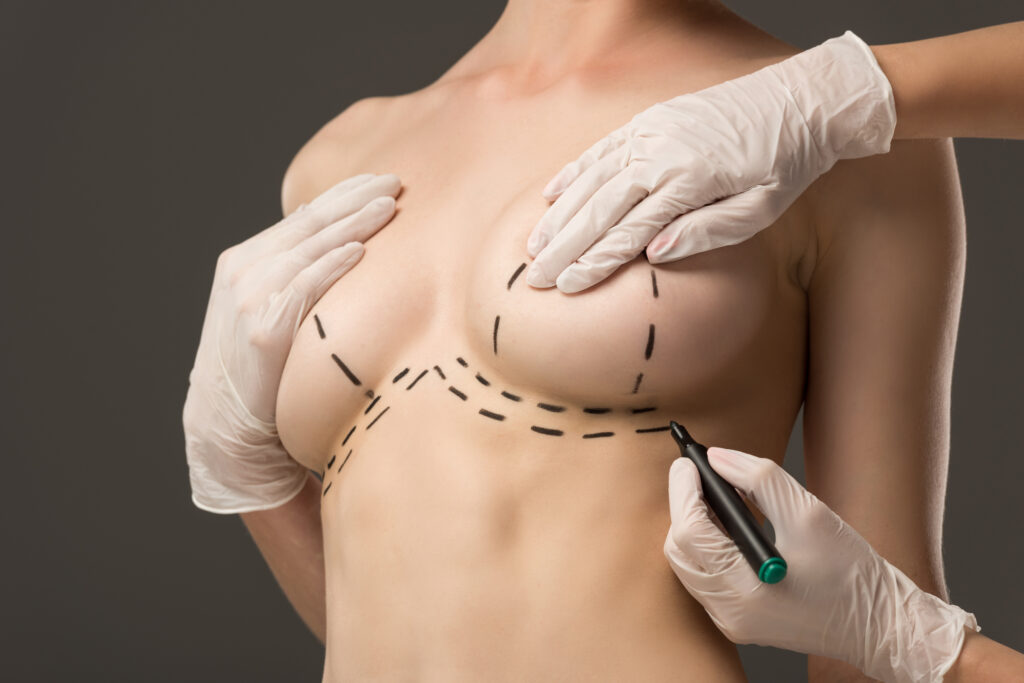
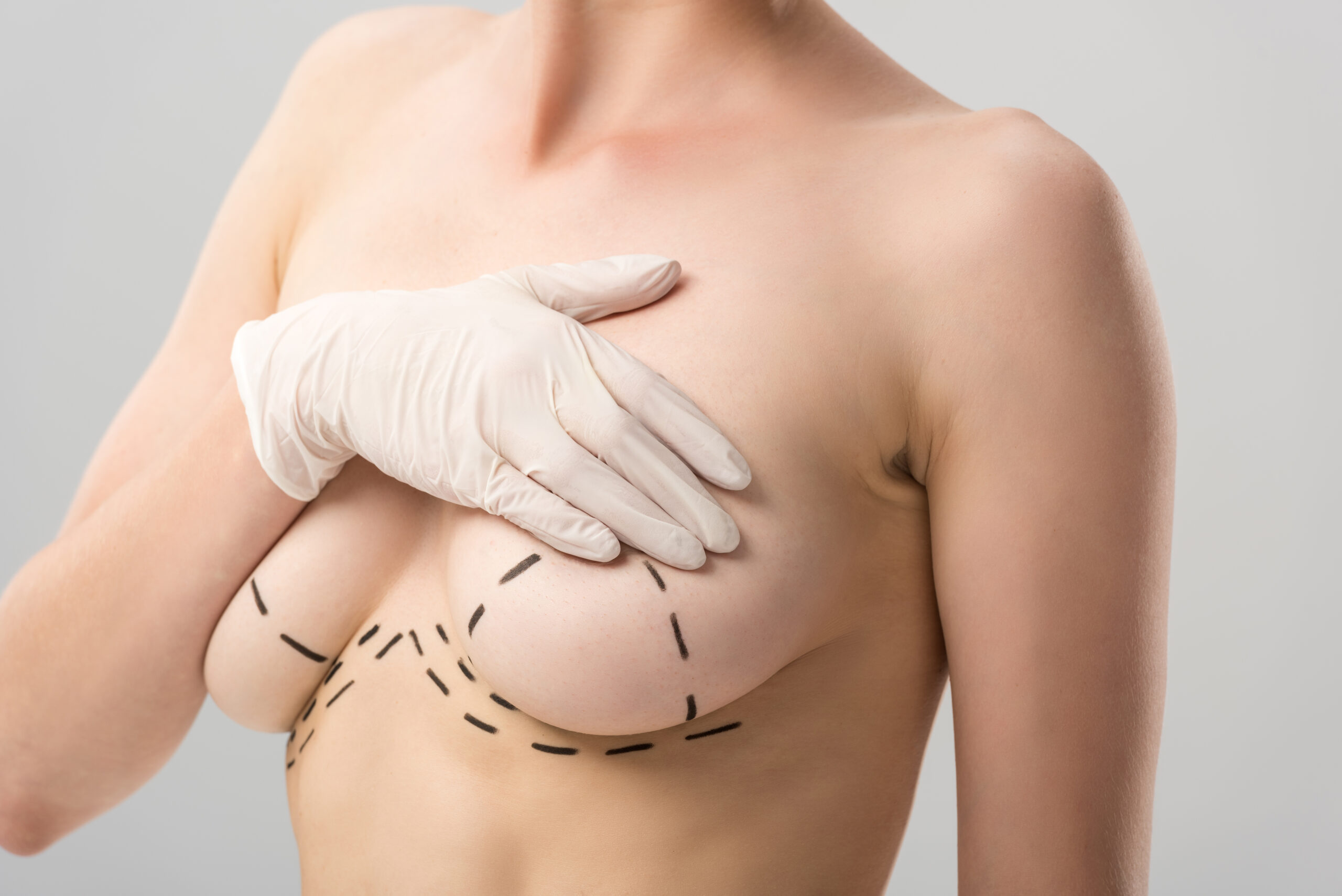
The great fear of many patients is scarring. As specialists, we must be honest: breast reduction always leaves scars, but their design and evolution make them highly concealable over time. The type of scar will depend on the volume to be reduced and the degree of sagging (ptosis). The most common is:
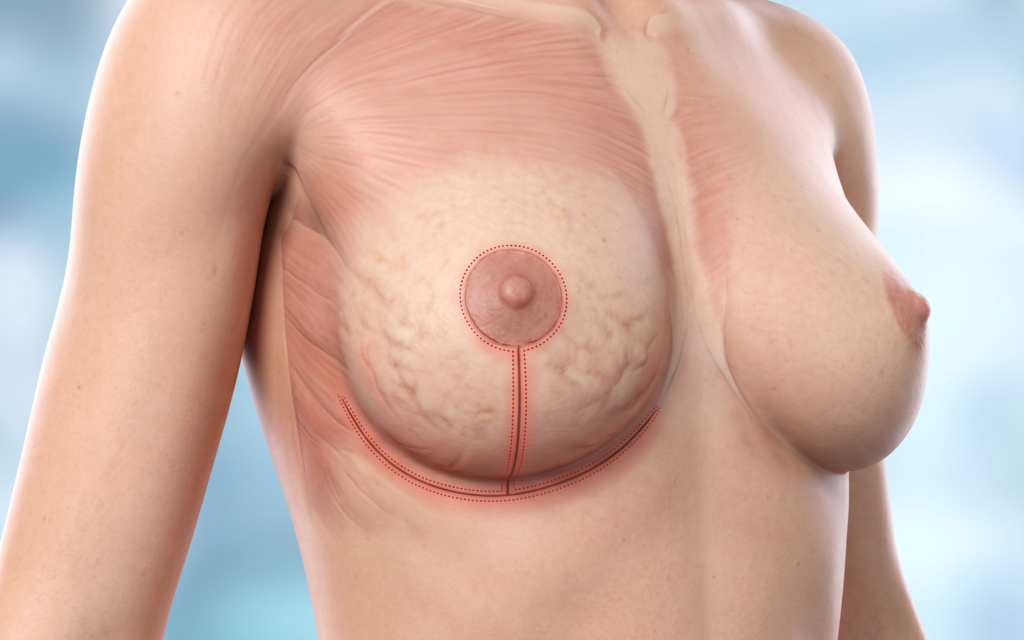
Inverted T Pattern (Anchor or Wise Pattern)
This is the most classic technique used for large breast reductions or gigantomastia. It consists of three lines:
- An incision around the areola (periareolar).
- A vertical line descending from the areola to the breast crease.
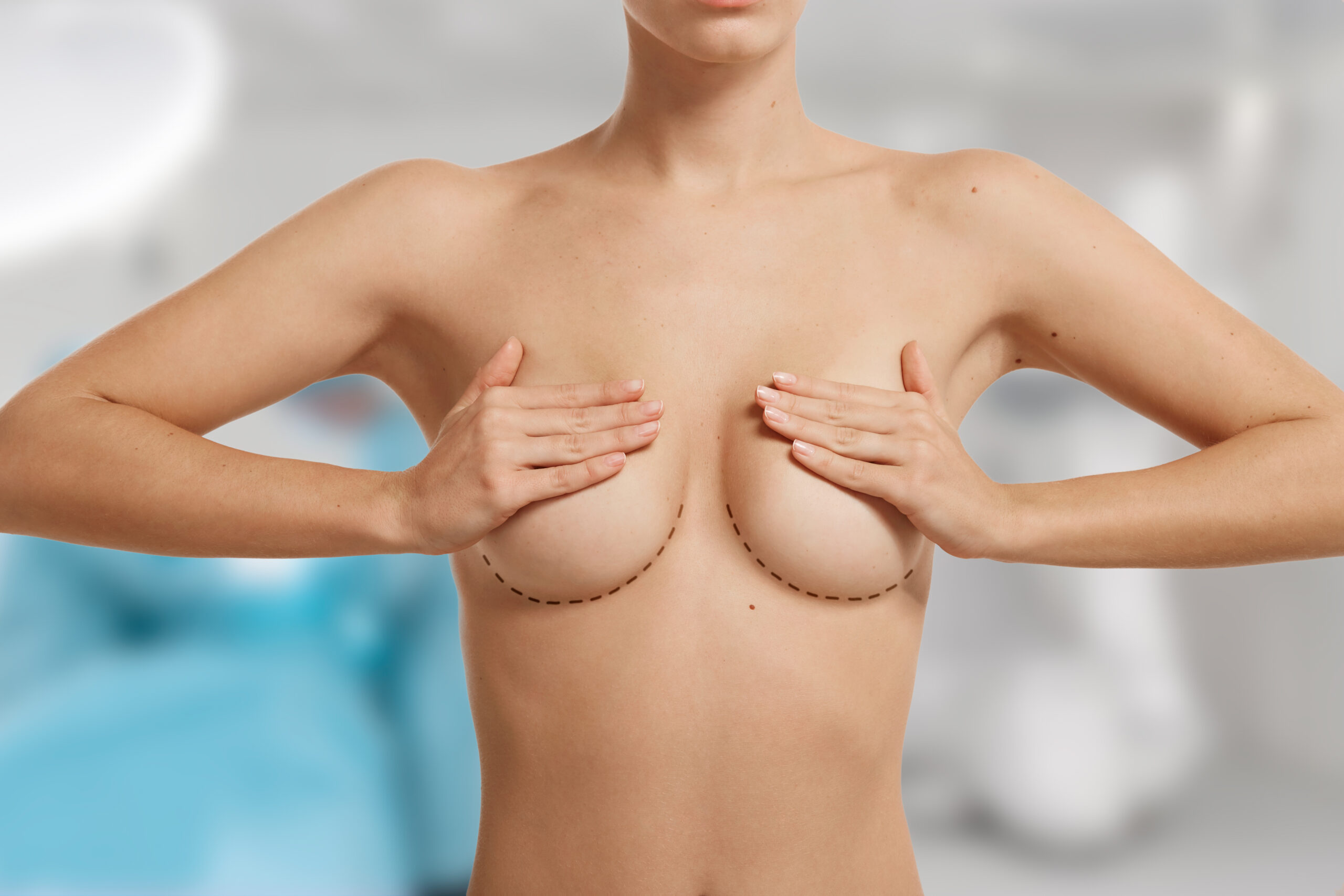
- A horizontal line following the natural curve of the submammary fold.
- Advantage: It allows for the removal of large amounts of tissue in all dimensions and excellently reshapes very saggy breasts.
First 24 to 48 hours
The patient usually stays overnight in the hospital for monitoring, peace of mind, and comfort.
First week
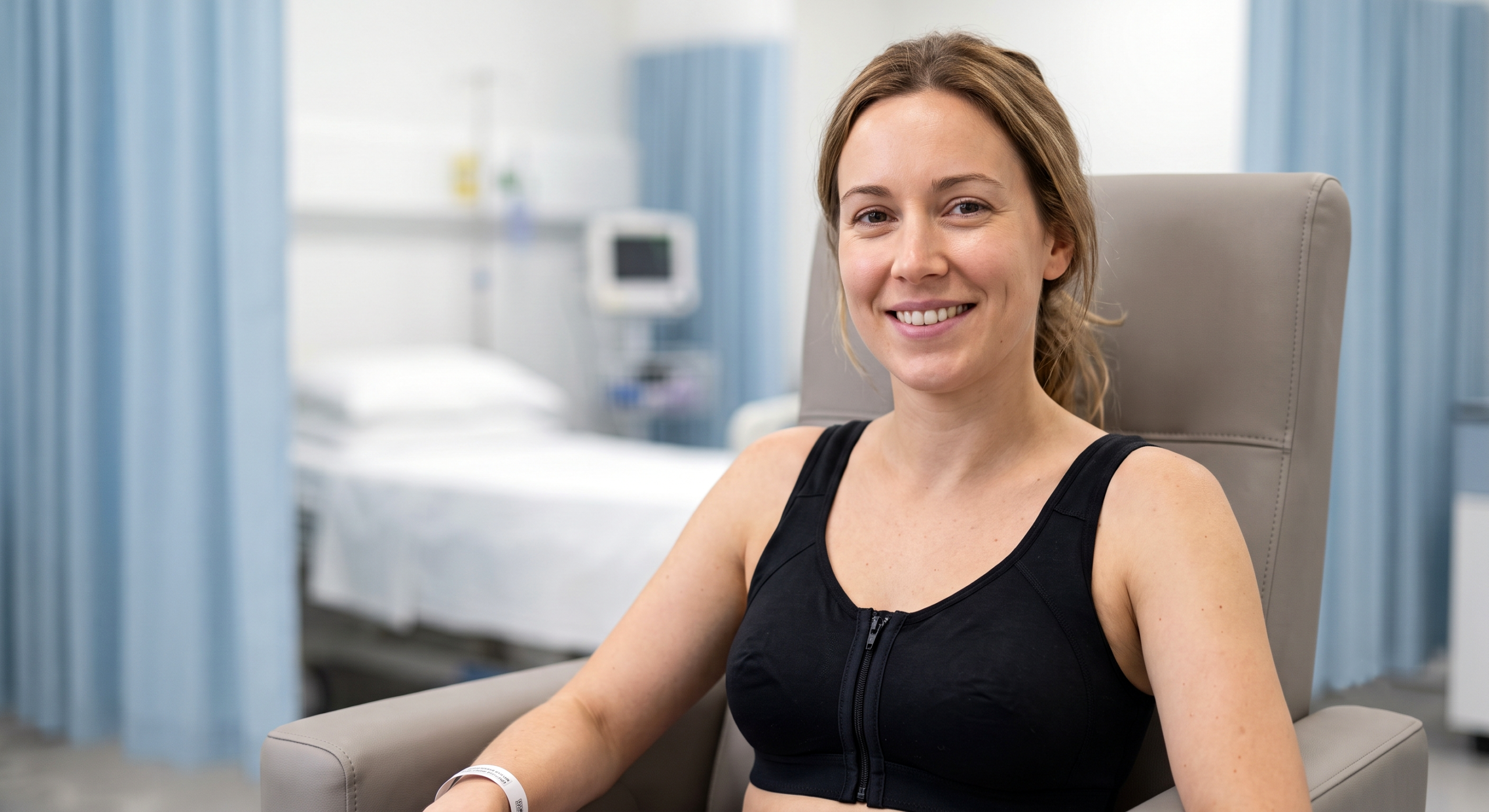
Relative rest at home. It is normal to feel mild tightness and swelling. The initial bandage is replaced by a wire-free, front-closure surgical bra.
Second week
Suture removal (if absorbable sutures were not exclusively used). Most patients with office or sedentary jobs can return to work.
First month
The surgical bra must be worn 24 hours a day. Daily walks are allowed, but lifting more than 5 kg or engaging in intense physical exercise is prohibited.
3 to 6 months
The breasts gradually settle into their final position as the tissue relaxes. Scars go through their erythematous (red/pink) phase.
At 12 months
The scar has completed its remodeling process, acquiring a flat, whitish tone. The result is considered final.
Scar Care Protocol
Dr. Alberto Sánchez García applies a specific protocol to maximize the aesthetic quality of the scars:
Hygiene and dry wound care (weeks 1 to 3)
Daily washing with water and neutral soap, careful drying with sterile gauze, and application of an antiseptic.
Silicone therapy (from the first month)
Continuous use of medical silicone sheets or gels for 3 to 6 months to prevent the development of hypertrophic or keloid scars.
Hydration and massages (after complete healing)
Circular massages to provide elasticity to the tissue.
Strict sun protection (first year)
Application of SPF 50+ sunscreen or total coverage from the sun to prevent permanent hyperpigmentation of the scar.
Frequently Asked Questions (FAQ) about Breast Reduction in Valencia
Answered by Dr. Alberto Sánchez García, your plastic surgeon in Valencia.
Below are the most common questions asked in our plastic surgery clinic in Valencia (both in-person and online), answered in detail by Dr. Alberto Sánchez García.
At what age can a breast reduction be performed?
Reduction mammoplasty can be performed once breast development is completely finished, which usually occurs between the ages of 18 and 20. However, in exceptional cases of juvenile or virgin mammary hypertrophy, where excessive growth causes severe physical or psychological deformities in adolescence, surgery can be considered before the age of majority after a strict medical evaluation and with parental consent. There is no upper age limit, provided the patient's health is adequate.
How much does breast reduction surgery cost in Valencia with Dr. Alberto Sánchez García?
The price of a breast reduction in Valencia varies depending on the complexity of each case, the surgical technique, the required operating room time, hospital overnight stays, and the anesthesia team. In Dr. Alberto Sánchez García's clinic, a personalized quote is offered after an in-person clinical assessment. The quote breaks down medical fees, hospital operating room use, anesthesia, postoperative check-ups, and the surgical bra. We offer custom financing options for patients from all over Spain, although they mainly come from Valencia, Castellón, Alicante, Albacete, and Teruel.
The estimated cost for this procedure in Valencia is between €5,500 and €6,900.
The estimated cost for this procedure in Valencia is between €5,500 and €6,900.
Does the public health system (Social Security) cover breast reduction in Valencia?
The Public Health System covers reduction mammoplasty only in very severe cases that meet strict medical criteria for gigantomastia (usually when an excision of more than 1,300 grams per breast is expected). However, waiting times in the Valencian Community can be prolonged, and the inclusion criteria are extremely rigid. Many patients opt for private healthcare to avoid delays, choose their trusted plastic surgeon, and obtain a personalized aesthetic and functional approach.
What are the risks and complications of a reduction mammoplasty?
As with any major surgical intervention, there are potential risks, although their incidence is low in the hands of a qualified plastic surgeon:
Hematomas or seromas (accumulation of blood or fluid that may require drainage).
Surgical wound infection.
Suture dehiscence (punctual opening of a stitch).
Hypertrophic or keloid scarring.
Partial or total necrosis of the nipple-areola complex (very rare, mainly associated with severe smoking).
Residual asymmetry in volume or shape.
Hematomas or seromas (accumulation of blood or fluid that may require drainage).
Surgical wound infection.
Suture dehiscence (punctual opening of a stitch).
Hypertrophic or keloid scarring.
Partial or total necrosis of the nipple-areola complex (very rare, mainly associated with severe smoking).
Residual asymmetry in volume or shape.
What is the relationship between smoking and complications in breast reduction?
Smoking is the most critical modifiable risk factor in breast surgery. Nicotine causes vasoconstriction of small blood vessels, drastically reducing oxygen flow to the skin and areola. This exponentially increases the risk of areola necrosis, delayed healing, and wound dehiscence. Smokers must commit to stopping smoking at least 4 weeks before and 4 weeks after the intervention.
Does breast reduction increase or decrease the risk of breast cancer?
Reduction mammoplasty does not increase the risk of developing breast cancer. In fact, by removing a considerable amount of glandular breast tissue, it statistically decreases the amount of tissue susceptible to developing a tumor in the future.
How will breast reduction affect my posture and back pain?
Relief from neck, back, and shoulder pain is almost immediate. After the intervention, by removing the weight load from the chest, the body's center of gravity returns to its natural anatomical position. Many patients report a substantial improvement in their posture, the disappearance of muscle contractures, and a feeling of lightness from the very first weeks.
Do you offer financing plans at the Plastic Surgery Clinic in Valencia?
Yes, at Alsaga Plastic Surgery we partner with entities to finance the treatment in comfortable installments (up to 60 months), so that the economic factor is not an impediment when it comes to improving your quality of life.
Why choose Dr. Alberto Sánchez García in Valencia for a breast reduction?
Dr. Alberto Sánchez García combines solid international surgical training with extensive experience in complex breast surgery. His approach stands out for:
Direct and personalized care by the surgeon himself from the first appointment to the final discharge.
Use of advanced surgical techniques that prioritize vascular safety and minimal scar visibility.
Operating in high-security hospital environments in Valencia.
An extremely high percentage of functional and aesthetic satisfaction in patients from all over the Valencian Community, Albacete, and Teruel.
Direct and personalized care by the surgeon himself from the first appointment to the final discharge.
Use of advanced surgical techniques that prioritize vascular safety and minimal scar visibility.
Operating in high-security hospital environments in Valencia.
An extremely high percentage of functional and aesthetic satisfaction in patients from all over the Valencian Community, Albacete, and Teruel.
How much breast gland weight is usually removed in a reduction?
The amount of tissue removed is tailored to the anatomical constitution and the patient's desire. Generally, between 300 and 1,000 grams per breast are removed. In cases of severe gigantomastia, removal can exceed 1,500 grams per side, meaning a weight relief of more than 3 kilograms in the pectoral area.
What is the difference between a mastopexy with reduction and a reduction mammoplasty?
Although both procedures lift sagging breasts (ptosis) and reshape the breast, the main difference lies in the primary goal and the volume of tissue removed:
Reduction Mammoplasty: Its primary goal is to remove a significant amount of gland, fat, and skin to reduce the weight and size of hypertrophic breasts.
Mastopexy (Breast Lift, with or without minimal reduction): Its purpose is to reposition a sagging breast into its ideal anatomical position. If there is excess skin, it is removed; but the volume of the gland removed is zero or insignificant.
Reduction Mammoplasty: Its primary goal is to remove a significant amount of gland, fat, and skin to reduce the weight and size of hypertrophic breasts.
Mastopexy (Breast Lift, with or without minimal reduction): Its purpose is to reposition a sagging breast into its ideal anatomical position. If there is excess skin, it is removed; but the volume of the gland removed is zero or insignificant.
What do breast reduction scars look like and where are they located?
Scars depend on the volume to be reduced and the excess skin to be removed:
Around the areola (Periareolar): Present in all techniques.
Vertical: From the bottom edge of the areola to the inframammary fold.
Horizontal: Along the inframammary fold (forming the inverted T or anchor technique).
Scars generally fade over time (12-18 months) and become very unnoticeable. At Alsaga Plastic Surgery, high-precision intradermal sutures are used, and we recommend silicone patches to optimize healing.
Around the areola (Periareolar): Present in all techniques.
Vertical: From the bottom edge of the areola to the inframammary fold.
Horizontal: Along the inframammary fold (forming the inverted T or anchor technique).
Scars generally fade over time (12-18 months) and become very unnoticeable. At Alsaga Plastic Surgery, high-precision intradermal sutures are used, and we recommend silicone patches to optimize healing.
Are breast reduction results permanent?
Yes, the removed glandular and fat tissue does not regenerate. Therefore, the results are long-lasting. However, the remaining breasts are still subject to the natural processes of aging, gravity, and above all, sudden changes in body weight or drastic hormonal fluctuations (such as a subsequent pregnancy), which could alter the volume or firmness of the breasts.
When are the final results of a breast reduction visible?
Although weight relief and contour improvement are evident from day one, the final shape of the breast is not immediately seen. During the first 1 to 3 months, there is mild edema (swelling) and the breast may look somewhat elevated or rigid. Over the months, the tissue drops to its natural position ("drop and fluff") and the skin adapts. The definitive final result, both in shape and scar maturation, is evaluated 1 year after the surgery.
What is a "dog-ear" and how is it fixed?
A "dog-ear" is a small fold or excess skin/fat that can remain at the ends of surgical scars (usually at the outer end of the inframammary fold scar) after adapting tissues of different volumes. In most patients, it flattens spontaneously during the first year as the skin remodels. If it persists after 6-12 months, it is corrected on an outpatient basis with a minor intervention under local anesthesia in a matter of minutes.
Is nipple sensitivity lost after surgery?
It is common to experience temporary alterations in the sensitivity of the nipple-areola complex (hypersensitivity or numbness) during the first months after surgery, due to the manipulation of nerve endings. In the vast majority of cases, sensitivity is gradually recovered over the first year. Dr. Sánchez uses neurovascular pedicle preservation techniques (such as the superomedial pedicle) that significantly minimize the risk of permanent sensitivity loss.
Will I be able to breastfeed in the future after a breast reduction?
The ability to breastfeed depends on the surgical technique used and the amount of glandular tissue that maintains its anatomical connection with the nipple and the lactiferous ducts. With modern pedicle-preserving techniques, between 60% and 80% of patients retain the ability to breastfeed. However, it is impossible to guarantee breastfeeding 100%. If having children and breastfeeding in the short term is an absolute priority, Dr. Sánchez García often recommends postponing the surgery or adapting the surgical technique.
What happens if I get pregnant after having a breast reduction?
Pregnancy causes hormonal changes that increase the size and volume of the mammary gland. If pregnancy occurs after surgery, the breast will experience natural changes and may increase in size. After childbirth and breastfeeding (if possible), the breasts may experience some sagging or drooping, although they will hardly return to the initial hypertrophic volume prior to surgery.
How should I prepare for the day of the surgery?
During the weeks leading up to your surgery in Valencia, you should:
Undergo blood work, an electrocardiogram, and other indicated tests.
Stop consuming tobacco, alcohol, and anticoagulant or anti-inflammatory medications (like aspirin) according to medical guidelines.
Arrive at the hospital after fasting for 8 hours (both solids and liquids).
Wear loose clothing with a front opening (button-down shirt or zip-up hoodie) so you don't have to raise your arms when getting dressed after discharge.
Undergo blood work, an electrocardiogram, and other indicated tests.
Stop consuming tobacco, alcohol, and anticoagulant or anti-inflammatory medications (like aspirin) according to medical guidelines.
Arrive at the hospital after fasting for 8 hours (both solids and liquids).
Wear loose clothing with a front opening (button-down shirt or zip-up hoodie) so you don't have to raise your arms when getting dressed after discharge.
What type of anesthesia is used during the surgery?
Breast reduction is performed under general anesthesia to guarantee the patient's total safety, immobility, and comfort throughout the surgery. An anesthesiologist monitors the patient's vital signs from start to finish.
How long does the breast reduction operation take in Valencia?
The intervention usually lasts between 2.5 and 4 hours, depending on the breast volume to be resected, the required technique, and the anatomical complexity. The surgery is performed with the utmost rigor and without rushing, guaranteeing meticulous hemostasis (bleeding control) before closing.
If I get a breast reduction with you in Valencia, is a hospital stay mandatory or is it outpatient?
Dr. Alberto Sánchez García recommends a one-day hospital stay (24 hours) in a prestigious center in Valencia (generally IMED Hospital). This allows proper control of pain relief during the first few hours, monitoring of drains (only if present), verifying the vascular viability of the areola, and discharging the patient the following day with complete peace of mind and safety.
Can a breast reduction be combined with another surgery (like liposuction or abdominoplasty)?
Yes. In selected patients with optimal health, it is possible to combine a reduction mammoplasty with interventions such as body liposuction, an abdominoplasty, or a mommy makeover. However, combining surgeries prolongs anesthesia time and requires rigorous medical evaluation to ensure safety standards are not compromised.
Is the breast reduction postoperative period painful?
Contrary to popular belief, a breast reduction is not a painful surgery. Most patients describe the discomfort as a feeling of pressure or tightness in the chest, similar to muscle soreness. This discomfort is controlled with oral analgesics and anti-inflammatories prescribed by Dr. Alberto Sánchez García's team during the first 3-5 days.
How much time off work is needed after a breast reduction?
The time off work depends on the type of job the patient does:
Sedentary or office jobs: Between 10 and 14 days of rest are required before returning to work.
Jobs involving physical exertion or arm movement: It is recommended to take about 3 weeks off work to avoid wound complications.
Sedentary or office jobs: Between 10 and 14 days of rest are required before returning to work.
Jobs involving physical exertion or arm movement: It is recommended to take about 3 weeks off work to avoid wound complications.
When can I return to sports or physical exercise?
Walking: From the second or third postoperative day (gentle walks).
Low-impact aerobic exercise (stationary bike, elliptical): From the 4th week.
High-impact sports (running, fitness, swimming, padel): From the 6th to 8th week, always using a high-support sports bra and following a follow-up confirmation by Dr. Sánchez García.
Low-impact aerobic exercise (stationary bike, elliptical): From the 4th week.
High-impact sports (running, fitness, swimming, padel): From the 6th to 8th week, always using a high-support sports bra and following a follow-up confirmation by Dr. Sánchez García.
When will I be able to drive after a breast reduction?
It is recommended not to drive for the first 2 to 3 weeks. Driving requires sudden movements of the arms and shoulder girdle (such as maneuvering the steering wheel or shifting gears) that can put tension on the pectoral sutures, plus the seatbelt puts direct pressure on the chest.
When are drains and sutures removed?
Drains (only if used): Usually removed 24-48 hours after the intervention, before hospital discharge or at the first follow-up appointment.
Sutures: Dr. Alberto Sánchez García predominantly uses absorbable intradermal sutures that the body degrades on its own, avoiding the discomfort of removing visible stitches. If any external reinforcement stitches are placed, they are removed between 10 and 14 days.
Sutures: Dr. Alberto Sánchez García predominantly uses absorbable intradermal sutures that the body degrades on its own, avoiding the discomfort of removing visible stitches. If any external reinforcement stitches are placed, they are removed between 10 and 14 days.
How should I sleep during recovery after a breast reduction in Valencia?
During the first 4 to 6 weeks, it is essential to sleep on your back (supine position), with your back slightly reclined using pillows or a reading cushion. Sleeping on your side or stomach is strictly contraindicated to avoid pressure or displacement on the healing breasts.
What type of bra should I wear after the operation and for how long?
You must wear a special postoperative surgical bra, made of breathable fabric, wire-free, with a wide back and front closure. This bra keeps the chest supported and reduces swelling. It should be worn 24 hours a day for the first month, taking it off only for personal hygiene. Later, Dr. Sánchez García will indicate when you can switch to sports or conventional wire-free bras.
What should I do if I notice a lump or hardness in my breast months after my breast reduction surgery in Valencia?
It is relatively common to feel small areas of hardness during the first months after the operation. In most cases, this is aseptic fat necrosis (reabsorption of small areas of inflamed fat tissue) or internal scar nodules that gradually soften with time and massage. Upon any such finding, Dr. Alberto Sánchez García follows up in his Valencia clinic to confirm it is a normal healing process.
Why choose us for your breast reduction in Valencia?
If you are looking for the best breast reduction clinic in Valencia, the choice of plastic surgeon is the most critical factor. Dr. Alberto Sánchez García (Alsaga Plastic Surgery) is recognized as one of the most perfectionist specialists in breast surgery in the Valencian Community.
Our clinical practice stands out for:
- Deep Specialization: Intensive dedication to reduction mammoplasty and short-scar mastopexy techniques.
- Accreditation: Official title of Specialist in Plastic, Reconstructive, and Aesthetic Surgery (MIR), member of SECPRE (Spanish Society of Plastic, Reconstructive, and Aesthetic Surgery).
- Premium Facilities: Interventions performed exclusively in the most prestigious and safest hospitals in the city of Valencia, equipped with ICUs and state-of-the-art technology.
- Patients from all over Spain: Thanks to our strategic location and the AVE high-speed train station, at Alsaga Plastic Surgery we constantly receive patients from Alicante, Castellón, Albacete, Teruel, Murcia, and Madrid, to whom we offer an accompaniment and accommodation management service to facilitate their surgery and postoperative care.
Our promise: Honest treatment, realistic expectations, and results that prioritize elegance and naturalness.
Location and Geographical Coverage of Care
Dr. Alberto Sánchez García's clinic is strategically located in Valencia, offering a service of excellence to local patients and those traveling from bordering provinces seeking the highest specialization in breast reduction:
- Valencia city and province: Valencia, Torrent, Gandía, Paterna, Sagunto, Alzira, Mislata, Burjassot, Ontinyent.
- Castellón: Castellón de la Plana, Vila-real, Burriana, Vinaròs, Benicàssim.
- Alicante: Alicante, Elche, Torrevieja, Orihuela, Benidorm, Alcoy, Denia.
- Albacete: Albacete city, Hellín, Villarrobledo, Almansa.
- Teruel: Teruel city, Alcañiz, Calamocha.
If mammary hypertrophy affects your daily life, causes back pain, or limits your lifestyle, request a first medical assessment with Dr. Alberto Sánchez García in Valencia and discover how breast reduction surgery can restore your comfort, health, and body confidence.
The medical information contained in this article is indicative and does not, under any circumstances, replace an in-person consultation with our plastic surgeon. Book an appointment and let’s talk.