



FACIAL SURGERY
Rhinoplasty in Valencia
The Ultimate Guide to Nose Surgery in Valencia, with Dr. Alberto Sánchez García
If you are looking for detailed and professional information about nose surgery, you have come to the right place. This comprehensive guide has been designed to answer all your questions about rhinoplasty, covering everything from technical details to the recovery process.
As a top-tier specialist in the Valencian Community and surrounding areas, Dr. Alberto Sánchez García has established himself as the trusted plastic surgeon for patients seeking natural, harmonious, and functional results, receiving patients daily not only from Valencia, but also from Castellón, Cuenca, Alicante, Albacete, and Teruel.
Below, we present the most complete, exhaustive, and detailed guide on rhinoplasty. If you are looking for the best plastic surgeon in Valencia for rhinoplasty and septoplasty, this information will help you make an informed decision.
Why choose Dr. Alberto Sánchez García as your plastic surgeon in Valencia?
The nose is the geometric centre of the face; any millimetre alteration in its structure has a profound impact on overall facial harmony. For this reason, rhinoplasty is considered the most complex and artistic intervention within plastic surgery.
Dr. Alberto Sánchez García approaches each case under a philosophy of “preservation and structure”. The goal is not to create a “cookie-cutter nose”, but to sculpt a nose that breathes perfectly and fits the unique proportions of your face. His high satisfaction rate has made him a reference for patients from Valencia, Alicante, Castellón, Cuenca, Albacete, and Teruel who do not want to leave their face to chance.
Indications: Are you the ideal candidate?
Rhinoplasty is not an exclusive surgery for aesthetics; often, form follows function. Patients come to Dr. Alberto Sánchez García’s clinic for three main reasons:
Aesthetic Reasons
Dorsal hump (prominent bridge), droopy or bulbous tip, asymmetrical nose or disproportionate to the rest of the face, and excessively wide nostrils.
Functional Reasons
Severe difficulty breathing through the nose, deviated nasal septum (associated septoplasty), turbinate hypertrophy, or valvular collapse. In these cases, a rhinoseptoplasty is performed.
Reconstructive Reasons
Previous traumas, accident sequelae, or secondary surgery (correcting a poorly performed rhinoplasty by another professional in the past).
The ideal candidate is a person with realistic expectations, in good general health, and who has completed their facial development (generally from 16-18 years of age).
Anatomy and Technical Details of the Surgery
To understand the surgery, one must first understand the structure of the nose. The nose is composed of an osteocartilaginous framework (bone and cartilage) covered by skin and muscle.
During the intervention, Dr. Alberto Sánchez García reshapes these three main sections:
The upper third
Formed by the nasal bones. This is where the "hump" is filed or sculpted, and the bony base is narrowed.
The middle third
Formed by the upper lateral cartilages and the septum. They are fundamental for respiratory function (nasal valve).
The lower third (the tip)
Formed by the alar (lower) cartilages. Their reshaping defines the rotation and projection of the tip.
The modern approach: Today, advanced techniques are used such as ultrasonic rhinoplasty (piezosurgery), which allows the bone to be sculpted using ultrasound vibrations without damaging the surrounding soft tissues, drastically reducing postoperative inflammation and bruising.
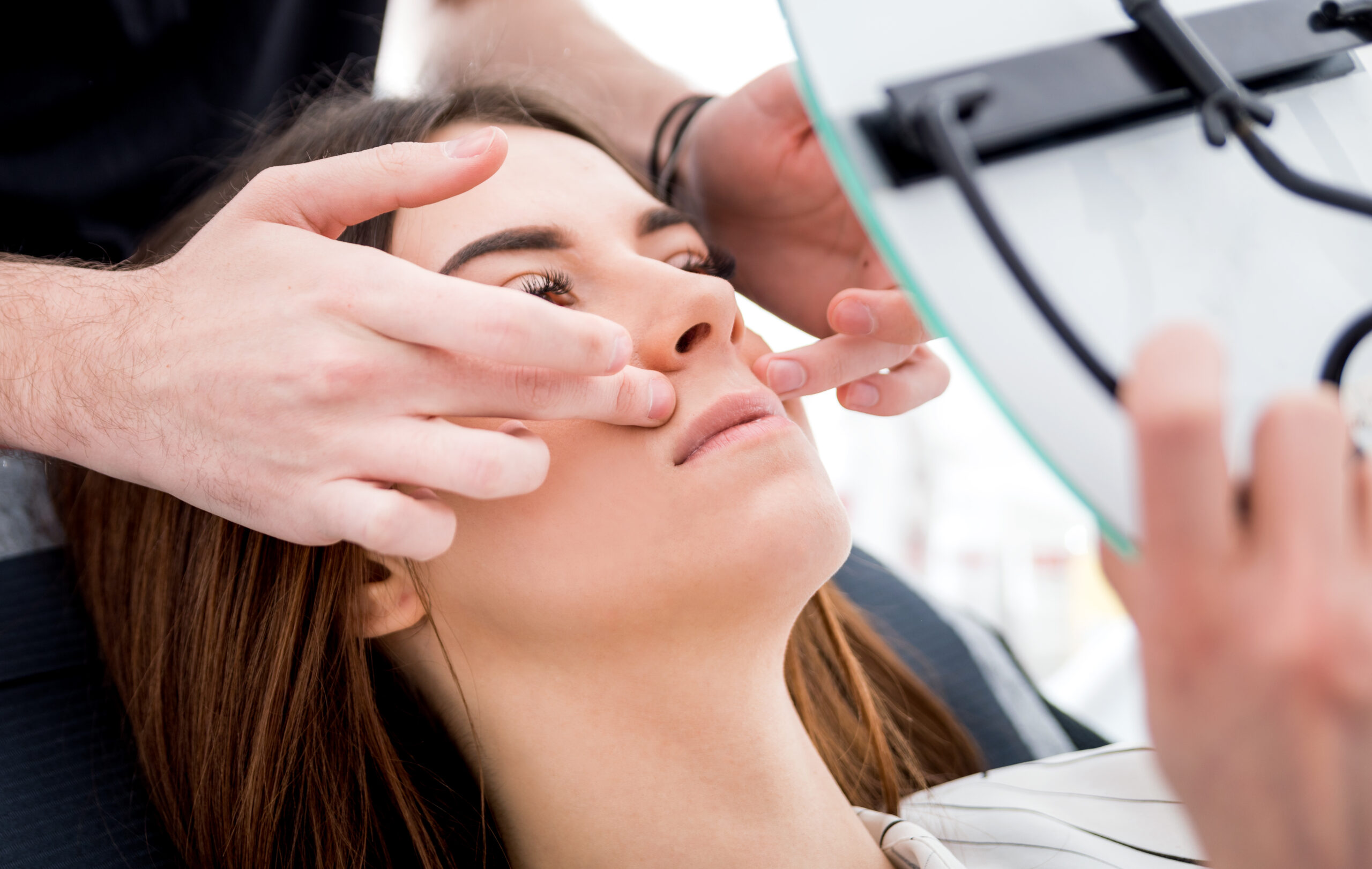
Preparation and Anesthesia. Duration: 30 minutes.
You will be administered general anesthesia. The goal is for you to feel no pain or anxiety.
Approach (Incisions). Open or Closed.
Dr. Sánchez García will make the incisions. In closed rhinoplasty, all are hidden inside the nostrils. In open rhinoplasty, a small incision is made in the columella (the tissue between the nostrils) that allows the skin to be lifted for direct vision of the structure.
Structure Reshaping:
Excess bone and cartilage are reduced (hump removal), or cartilage grafts (usually from the patient’s own septum) are added to provide support and shape to the nasal tip. If the ultrasonic technique is used, the bone is filed extremely smoothly.
Functional Correction (Septoplasty):
If there is a deviated septum preventing proper breathing, it is straightened at this time, ensuring the patency of the airways.
Closure and Splint:
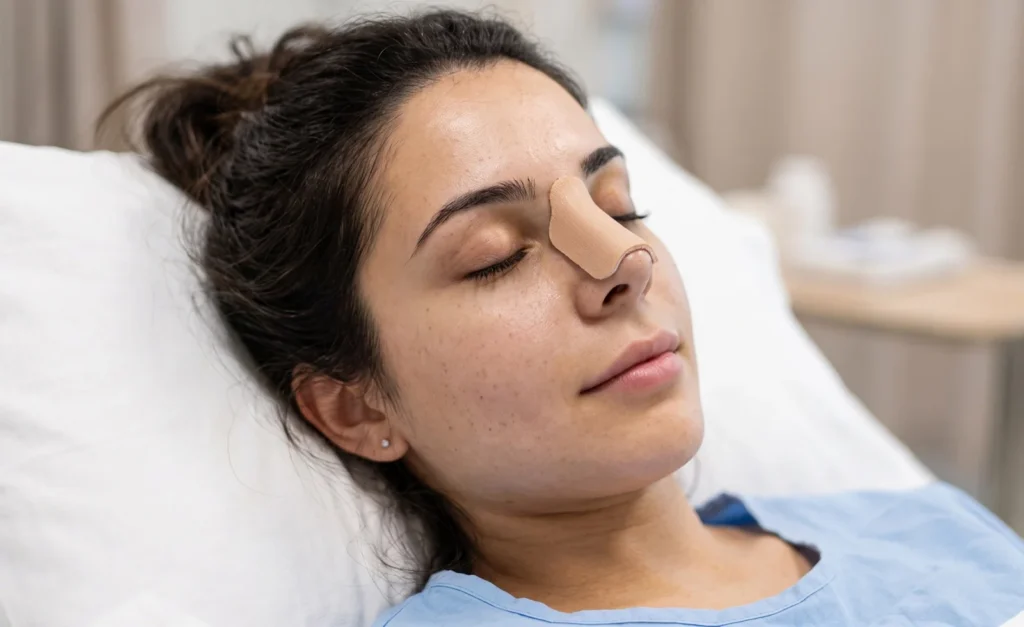
The skin is readapted over the new structure, the incisions are closed with very fine stitches, and an external splint is placed to protect the nose and keep the bones in their new position while they heal.
Recovery and Postoperative Care
The postoperative period of a modern rhinoplasty is much more bearable than most patients imagine. The key is patience, as the nose retains fluids and takes months to completely reduce inflammation.
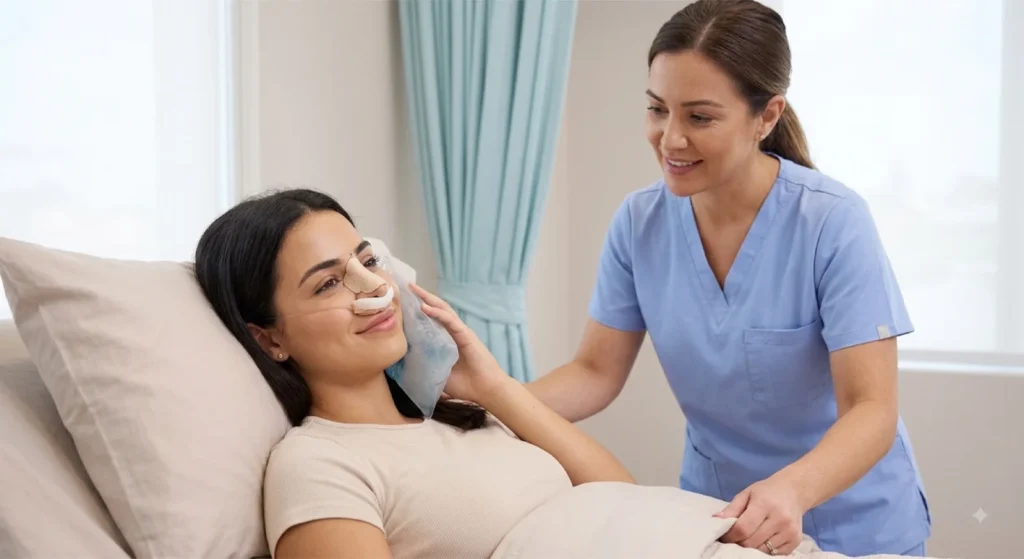
First 24-48 hours
This is the swelling period. You will feel nasal congestion (like a cold). You should sleep with your head elevated and apply indirect cold.
Day 7
You will visit the clinic in Valencia so that Dr. Sánchez García can remove the splint and visible stitches. You will see your new nose for the first time, although it will be quite swollen, especially at the tip.
Days 10-14
Any bruising (which is minimal with the ultrasonic technique) has usually disappeared. You can return to work or in-person classes.
Week 4
You can resume moderate-intensity cardiovascular exercise. You must still avoid contact sports or the risk of balls hitting your face (soccer, basketball, martial arts).
12 to 18 months
Final result. Residual inflammation completely disappears, especially in patients with thick skin. The cartilage and skin have permanently fused to their new structure.
Frequently Asked Questions (FAQ) about rhinoplasty in Valencia
Answered by Dr. Alberto Sánchez García, your plastic surgeon in Valencia.
We know that taking this step generates doubts. Below, Dr. Alberto Sánchez García answers the most frequently asked questions by our patients from Valencia, Castellón, Cuenca, Alicante, Albacete, and Teruel, regarding rhinoplasty.
At what age can I undergo rhinoplasty in Valencia?
Generally, from age 16 for women and 17-18 for men, when facial growth is complete. There is no maximum age limit, provided that your health is good.
Does rhinoplasty hurt?
It is one of the least painful surgeries. Patients describe it more as "discomfort" due to nasal congestion (a feeling of a stuffed nose) than actual pain. The prescribed painkillers are more than enough.
How long does the operation take?
Depending on the complexity, between 2 and 3 hours. Secondary or reconstructive surgeries can take longer.
Is it general or local anaesthesia?
Dr. Sánchez García prefers general anaesthesia or deep intravenous sedation combined with local anaesthesia. It guarantees that the patient is completely asleep, safe, and pain-free, allowing the surgeon to work with maximum precision.
When is the final result visible if I get a rhinoplasty in Valencia?
Upon removing the splint (day 7), you will see an obvious change, but the nose will be swollen. At one month, 70% of the swelling has gone down. The definitive result is assessed between 12 and 18 months, when the skin on the tip fully adapts.
Will I have bruises on my face?
With the traditional technique, it was very common to have black eyes ("raccoon eyes"). Today, thanks to modern rhinoplasty, bruising is minimal or non-existent in most cases.
When can I return to work?
Most patients return to office jobs or teleworking between 7 and 10 days after the surgery.
When can I do sports?
Walking gently from the first day is beneficial. Cardiovascular exercise (running, cycling) can be resumed at one month. Contact or ball sports should be avoided for at least 3 months.
Can I wear glasses after having rhinoplasty in Valencia?
You should not rest glasses (neither sunglasses nor prescription) on the nasal bridge during the first 6 to 8 weeks, as the bones are consolidating and the weight could leave marks or move them.
What is the immediate postoperative period at home like?
You will need relative rest. You will need to do nasal washes with saline solution to keep the area clean and sleep on your back with your head slightly elevated.
Do I have to wear nasal packing?
We rarely use packing. If anything is required, it is small silicone splints that allow you to breathe and do not hurt when removed.
What is the difference between open and closed rhinoplasty?
In closed rhinoplasty, the incisions go on the inside and there is no external scar, making it ideal for minor changes. In open rhinoplasty, a small cut is made in the columella. The open technique allows the surgeon to see the entire structure, making it the best option for complex cases or precise modifications to the tip.
What is ultrasonic rhinoplasty?
It is a revolutionary technique where the traditional chisel and mallet are replaced by a piezoelectric ultrasound device. It cuts and files the bone with maximum precision without damaging blood vessels, mucosa, or skin.
Are scars noticeable in rhinoplasty in Valencia?
If the technique is closed, there are no external scars. If it is open, the incision at the base of the nose usually becomes practically invisible after a few months.
Will I breathe better after surgery?
If you have a functional problem (deviated septum or hypertrophic turbinates), Dr. Sánchez García will correct both problems at the same time (rhinoseptoplasty). Aesthetics must never compromise function; a beautiful nose must breathe well.
What happens if I catch a cold or sneeze?
If you need to sneeze in the first few weeks, you must do it with your mouth open to avoid generating pressure in the nose. A cold will be uncomfortable due to the extra congestion, but it will not ruin the surgery.
When can I sunbathe?
You must avoid direct sun exposure while you have bruises to prevent the skin from pigmenting. Afterward, always use 50+ SPF. It is advisable to avoid intense sunbathing for 2-3 months.
How should I sleep after a nose job?
On your back and with your head elevated (using two pillows) for the first 3 weeks. This helps reduce morning swelling and prevents accidental rubbing of the nose against the pillow.
Can I smoke before or after?
No. Tobacco is the worst enemy of healing, because it constricts blood vessels and decreases oxygen in the tissues. You must stop smoking 4 weeks before and 4 weeks after the intervention, to prevent necrosis or infections.
Can a previous surgery with an unsatisfactory result be corrected?
Yes, this is known as secondary rhinoplasty. It is a more complex intervention because the original anatomy is altered, and there is usually scar tissue. It often requires cartilage grafts from the rib or ear. Dr. Sánchez García performs this surgery in Valencia.
Will my voice change?
Not drastically. If you had a very nasal voice due to severe obstruction and the septum is corrected, your voice will lose that nasal tone and sound clearer.
Is the result for life?
Yes, structural changes are permanent. However, like the rest of the body, the nose will undergo slight natural changes associated with the general aging process decades later.
Is it necessary to massage the nose?
In some cases, the surgeon will prescribe specific massages during the postoperative period to help reduce edema, mold the tissue, or prevent asymmetries. Never massage it if the doctor has not instructed you to do so.
What diet should I follow after the surgery?
For the first few days, a soft diet that is cold or at room temperature is recommended, since chewing hard foods or eating very hot things can increase swelling in the area.
When can I wear makeup after rhinoplasty in Valencia?
You can apply makeup to the rest of your face from the first day (avoiding the splint area). Once the splint is removed a week later, you can apply light makeup over the nose, removing it with extreme care and without applying pressure.
Is it safe to fly soon after?
It is recommended to wait at least 10-15 days. Pressure changes in the airplane cabin can cause discomfort, pain, or, in rare cases, minor nosebleeds in the days immediately following surgery.
Does thick skin affect the result of the rhinoplasty?
Yes. Patients with very thick skin (typical of bulbous noses) take longer to reduce swelling (up to 2 years) and the skin "masks" the fine details of the cartilage. Dr. Sánchez García uses specific structural support techniques to ensure the tip maintains its shape and projection in thick skin.
Can it be combined with other surgeries?
Absolutely. It is very common to combine it with chin augmentation (mentoplasty) to achieve total balance of the facial profile (profiloplasty). It is also frequently combined with blepharoplasty (eyelid surgery) or breast augmentation.
How much does a rhinoplasty cost in Valencia?
The quote is entirely personalized. It varies depending on whether it is a primary or secondary surgery, if rib cartilage must be used, the type of anesthesia, and the duration. At his clinic in Valencia, Dr. Alberto Sánchez García's team will provide you with a fixed and detailed quote after your first medical assessment.
The average price range for this procedure in Valencia generally varies between €6,000 and €7,900, tailored to each patient's needs.
The average price range for this procedure in Valencia generally varies between €6,000 and €7,900, tailored to each patient's needs.
How do I prepare in the days before the operation?
You must undergo preoperative tests (blood test, electrocardiogram), stop medications that alter coagulation (such as Aspirin or Ibuprofen), abstain from alcohol and smoking, and prepare your home with soft foods and prescribed medicines for your return.
The decision to undergo rhinoplasty is a vital step that requires absolute trust in the hands that operate on you. If you live in Valencia, Alicante, Castellón, Albacete, Cuenca, or Teruel, Dr. Alberto Sánchez García offers you the peace of mind of an honest diagnosis, impeccable technique, and close accompaniment throughout your entire process. His maxim is that a good rhinoplasty is one that goes unnoticed: a result so natural that everyone will see you look better, but no one will know exactly why.
The medical information contained in this article is for guidance purposes only and does not replace, under any circumstances, an in-person consultation with our plastic surgeon. Request an appointment and let’s talk.