



BREAST SURGERY
Gynecomastia Surgery in Valencia
The Ultimate Guide for a Natural Result with Dr. Alberto Sánchez García
Welcome to the most comprehensive guide on gynecomastia surgery in Valencia, created by Dr. Alberto Sánchez García (Alsaga Plastic Surgery).
We understand that excessive male breast tissue development is a condition that goes far beyond aesthetics. It deeply affects self-confidence, dictates clothing choices, and impacts comfort during everyday activities like going to the beach, the gym, or wearing tight clothes. At our plastic surgery clinic in Valencia, we approach this issue with the utmost empathy, scientific rigor, and the most advanced surgical techniques to guarantee a flat, masculine, and natural-looking chest. Our scope of practice includes patients from all over Spain, primarily Valencia, Castellón, Alicante, Cuenca, Teruel, and Albacete.
If you are looking for the best plastic surgeons specializing in male breast reduction and gynecomastia in Valencia and surrounding areas, this page is designed to answer your questions, from the first consultation to your full recovery, so you can make an informed and safe decision.
Our goal is to position ourselves not only as anatomical and surgical authorities but as the trusted medical team that patients would recommend to a friend or family member, due to our rigor and transparency.
What is Gynecomastia?
By Dr. Alberto Sánchez García, your plastic surgeon in Valencia.
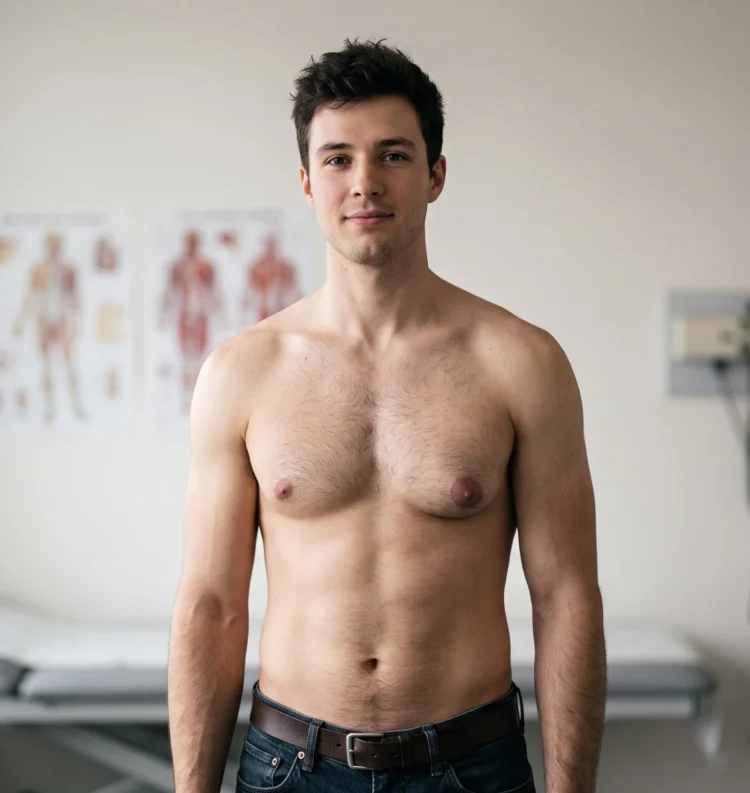
Gynecomastia (from the Greek gyne ‘woman’ and mastos ‘breast’) is the benign enlargement of glandular breast tissue in men. Although many patients feel embarrassed to consult a plastic surgeon about this topic, it is an extremely common condition: it is estimated that up to 30-40% of adult men present some degree of gynecomastia throughout their lives.
It is essential to clinically distinguish between two conditions that, although visually similar, require different approaches:
- True gynecomastia: There is real, hard, and fibrous growth of the mammary gland, usually located right behind the areola. It does not disappear with diet or exercise.
- Pseudogynecomastia (or lipomastia): The increase in volume is due exclusively to the accumulation of fat (adipose tissue) in the pectoral area, very common after significant weight fluctuations.
- Mixed gynecomastia: This is the most common scenario in consultations. It combines an excess of hard glandular tissue, surrounded by an excess of localized fat.
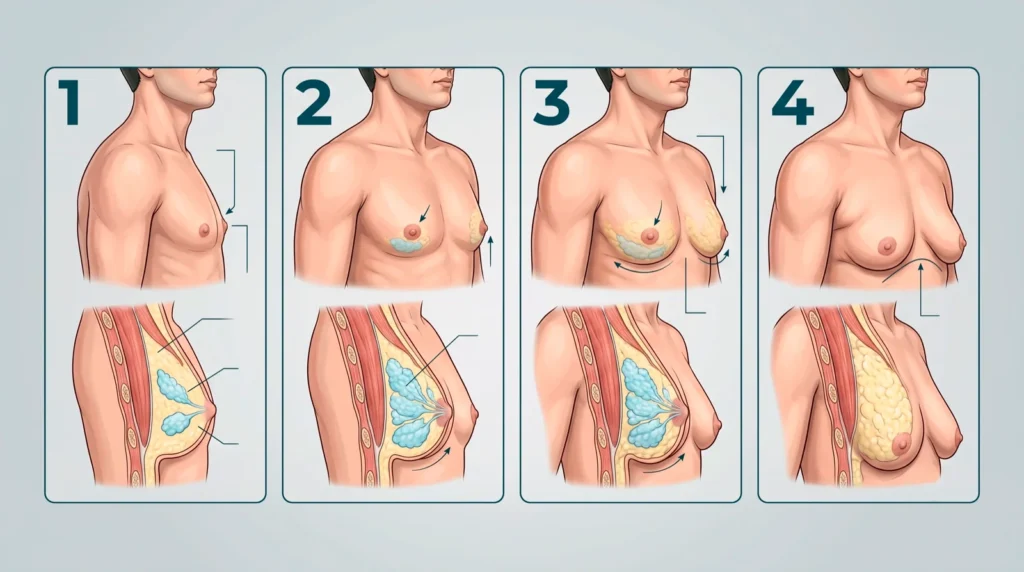
Degrees of Gynecomastia (Simon’s Classification)
To determine the best male chest reduction treatment, at Alsaga Plastic Surgery we evaluate the degree of gynecomastia development:
Grade I
There is a mild and localized enlargement of the breast, with no excess skin. Simple glandular resection via the periareolar approach is recommended.
Grade IIa
Moderate breast enlargement, with no excess skin. We usually perform liposuction and glandular resection via the periareolar approach.
Grade IIb
Moderate breast enlargement, with a slight excess of skin. The most frequent approach is combined: liposuction, resection, and a possible slight skin adjustment.
Grade III
Marked enlargement with evident excess skin (ptotic breast). Glandular resection and skin excision are required (male mastectomy, also known as chest masculinization).
Causes and Ideal Candidates for Gynecomastia Surgery in Valencia
By Dr. Alberto Sánchez García, your plastic surgeon in Valencia.
Why does gynecomastia appear?
The growth of the male mammary gland is usually caused by an imbalance between sex hormones (estrogens and androgens). The most common causes include:
Physiological changes
Very common during puberty (affects more than half of teenagers and usually resolves on its own) and in older age (due to the natural drop in testosterone).
Drugs and substances
Use of anabolic steroids, certain antidepressants, prostate medications, hair treatments (finasteride), or prolonged use of alcohol and cannabis.
Medical conditions
Hyperthyroidism, kidney failure, testicular tumors, or liver diseases.
Idiopathic
In 25% of cases, hormonal blood tests are completely normal, and no identifiable underlying cause is found.
The Ideal Candidate for Male Breast Reduction Surgery
At our plastic surgery clinic in Valencia, we recommend surgery for men of any age (once physical development is complete) who present:
Breast enlargement that has been stable for at least one year.
Good overall health and a weight close to ideal (or stable).
No consumption of anabolic substances or drugs.
A solid commitment to postoperative recommendations.
Surgical Approaches and Techniques
Gynecomastia surgery is a highly personalized procedure. Dr. Alberto Sánchez García selects the surgical technique based on the proportion of fat to mammary gland and the elasticity of your skin. Our primary goal is to achieve a flat chest, minimizing visible scarring.
Assisted Pectoral Liposuction (For Pseudogynecomastia)
If the volume is predominantly fatty, we use advanced liposuction techniques through millimetric incisions (3-4 mm) hidden in the chest crease or the armpit. We utilize the latest technologies to liquefy the fat and promote greater retraction and adhesion of the skin to the pectoral muscle.
Subcutaneous Mastectomy (Glandular Excision)
When there is firm glandular tissue, liposuction is not enough (the gland is dense and cannot be suctioned). We make a small incision at the lower edge of the areola (inferior periareolar incision). Through this small approach at the color transition between the areola and the skin, Dr. Sánchez García extracts the glandular disc. The resulting scar is usually imperceptible over time.
Combined Treatment (Most frequent technique)
In 80% of our patients in Valencia, we perform a mixed technique: first, liposuction to empty the fatty component and contour the edges of the pectoral muscle, followed by a direct excision through the areola to extract the hard glandular core that remains under the nipple.
Skin Resection (Severe grades)
In patients with massive weight loss or highly advanced gynecomastia (Grade III), the skin lacks the elastic capacity to retract. In these cases, skin needs to be removed, leaving a scar around the areola (full periareolar) and, on limited occasions, a vertical line, similar to female breast reductions.

Initial Assessment and Diagnosis: Consultation in Valencia.
Dr. Alberto Sánchez García will evaluate your medical history, examine your chest, measure skin laxity, and palpate the gland to rule out other pathologies. We will request blood tests and, if necessary, a breast ultrasound.
Planning and Preoperative Care
We will define the technique (Liposuction, resection, or mixed). We will give you strict instructions: stop smoking, aspirin, and certain supplements for 15 days prior to the intervention.
The Surgical Intervention: Duration: 2 hours.
It is performed in a top-tier hospital operating room, under general anesthesia or local anesthesia with deep sedation (depending on the case), ensuring your maximum safety and comfort. You will feel absolutely nothing.
Waking Up and Discharge
You will leave the operating room with a compressive bandage or chest garment already in place. After a few hours of observation in the recovery area, 90% of patients go home the same day (outpatient surgery), although an overnight stay can also be included (if the patient prefers).
Recovery Times (The Postoperative Period)
Knowing what to expect after surgery will help you organize your work and personal life. At Alsaga Plastic Surgery, we design a “Fast-Track” recovery protocol to get you back to your routine as soon as possible.
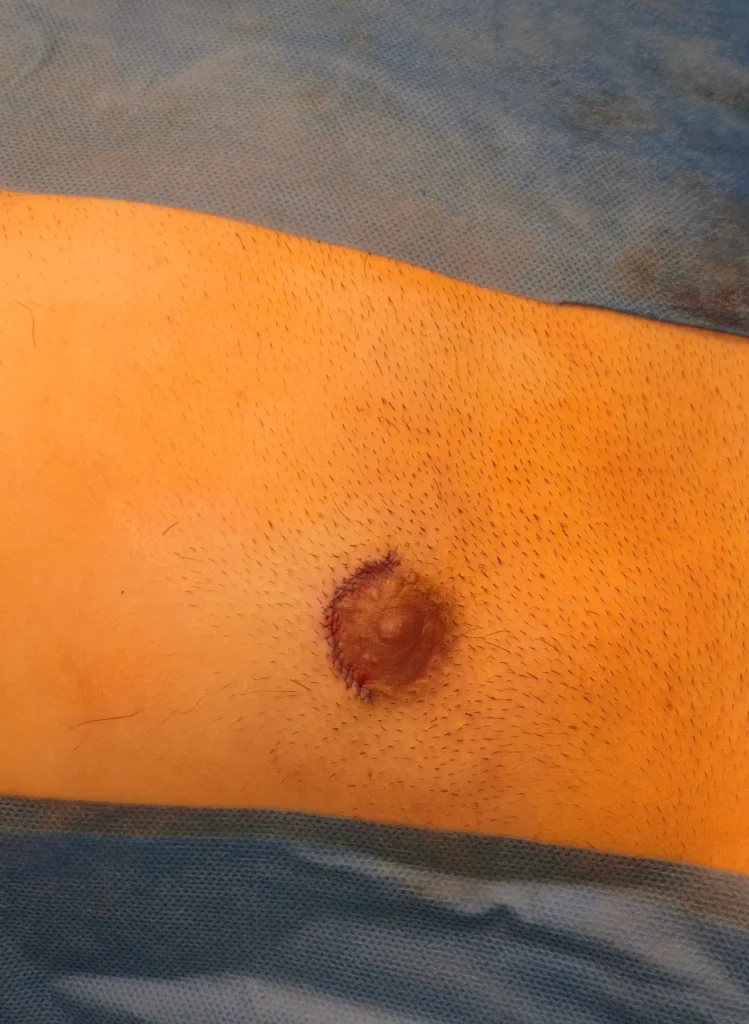
First 48 hours
Inflammation phase. It is normal to feel muscle soreness or tightness in the chest. You must wear the compression garment continuously and sleep on your back, with your torso slightly elevated.
First Check-up (days 4-7)
Appointment at our clinic in Valencia. Dr. Sánchez García will check the area, remove the stitches (if they are not absorbable), and confirm there are no accumulated hematomas. You can return to an office job or telework. Return to normal life.
Weeks 2-3
You can start taking light walks and doing mild cardiovascular exercise (stationary bike). You still need to wear the compression garment day and night.
Weeks 4-6
Clearance to remove the compression garment. Upper body workouts, weightlifting, and contact sports are gradually resumed.
Months 3-6
The residual swelling (edema) completely disappears. The skin has readapted to the new contour, and the scars lighten, revealing an almost final result and a flat chest.
Frequently Asked Questions (FAQ) about Gynecomastia Surgery in Valencia
Answered by Dr. Alberto Sánchez García, your plastic surgeon in Valencia.
Below, we have compiled and answered in detail the questions most frequently asked by patients before undergoing surgery. We have divided them into areas to make it easier for you to read.
How do I know if I have gynecomastia or just fat (pseudogynecomastia)?
True gynecomastia feels like a firm, elastic, and somewhat tender mass right behind the nipple. Pseudogynecomastia is fat and feels soft all around the chest contour. A breast ultrasound is the definitive test to confirm the anatomical diagnosis.
Can gynecomastia disappear on its own over time?
Only in specific stages. If it appears during puberty (between 13 and 15 years old), in over 80% of cases it disappears spontaneously after 1 to 2 years. If it appears in adulthood, or if pubertal gynecomastia persists past adolescence and becomes fibrous (more than 12-18 months of evolution), it generally no longer disappears without surgery.
Does dieting and going to the gym eliminate gynecomastia?
No. Exercise and weight loss reduce chest fat (pseudogynecomastia), but cannot reduce glandular tissue. In fact, athletic patients who significantly lower their body fat percentage sometimes notice more pronounced gynecomastia, as the gland stands out more against a fat-free pectoral muscle.
At what age can I get male breast reduction surgery in Valencia?
When planning a gynecomastia surgery in Valencia, we always recommend waiting until 17-18 years of age, when the hormonal development of puberty has stabilized. Operating earlier carries a higher risk of the gland growing back (recurrence).
Does gynecomastia increase the risk of male breast cancer?
Gynecomastia itself is not a pre-malignant risk factor. However, male breast cancer does exist. For this reason, at Alsaga Plastic Surgery, we offer to send the excised gland to the laboratory for a routine anatomopathological study (biopsy), ensuring your peace of mind.
Is gynecomastia painful without surgery?
In some patients, the gland presents hypersensitivity, discomfort when rubbing against clothing, or pain (mastalgia), especially in active growth stages. Plastic surgery permanently eliminates this physical discomfort.
What medical tests do I need before the operation?
At a minimum, a complete blood count with a coagulation study and an electrocardiogram. In most cases, we will request a breast ultrasound, and if an endocrine origin is suspected, a hormonal blood profile.
Can steroid use cause irreversible gynecomastia?
Yes, it is an extremely common cause in the fitness world. The excess external testosterone is converted into estrogens (aromatization), developing the gland. If the gland has established itself and become fibrous, only male chest reduction surgery will eliminate it, and the patient must stop using steroids before and after the intervention to prevent recurrences.
Does gynecomastia surgery require general anaesthesia?
At our plastic surgery clinic in Valencia, Dr. Alberto Sánchez García prefers to operate under general anesthesia or, in mild and selected cases, with local anesthesia and intravenous sedation. The priority is the absolute safety of the patient and ensuring that the plastic surgeon can work with precision on the muscular contours without you feeling the slightest discomfort.
How long does the operation take?
It depends on the grade and the technique, but it usually lasts between 1.5 and 2.5 hours.
Will I be admitted to the hospital?
Generally, it is a major outpatient surgery. This means that after a few hours of recovery in the hospital, you will be able to sleep in your own home the same day of the surgery.
Where is the gland extracted from?
Through a semicircular incision at the lower edge of the areola (the border between dark and light skin). Through there, it is possible to extract all the fibrous tissue.
Is it safe to combine surgery with liposuction?
It is ideal and the most common approach. Performing only the excision of the gland can leave a "depression" or sinking under the nipple. Simultaneous liposuction on the edges allows for natural blending, leaving the chest sculpted and preventing irregularities.
If I have very large or "puffy" nipples, is their size reduced?
Yes. The bulging (or "cone" appearance) of the nipple is due to the pressure from the underlying gland. By removing it, the areola immediately flattens. Furthermore, if the areolar diameter is very wide, we can perform an areola reduction in the same surgery.
What happens to the skin if I have a very large breast volume?
In most young or middle-aged patients, the skin has excellent elasticity and, aided by the compression garment, retracts to fit the muscle. If there is massive excess and sagging, skin resection may be necessary, leaving a scar around the areola and/or a discreet line that follows the lower edge of the pectoral muscle. In all cases, the patient is informed during the consultation of the most recommended approach for their case.
Is the intervention in an operating room or in the consultation room?
Always in an accredited hospital operating room. Patient safety is non-negotiable for us.
Will I have drains left in?
In most standard approaches (grades I and II), we do not leave drains. In very severe gynecomastia cases where bleeding is more likely or a lot of skin is removed, we may leave small tubes for 24-48 hours to prevent fluid accumulation (seromas or hematomas), although this depends on the case.
Is the postoperative period painful?
It is less painful than most patients imagine. Our gynecomastia patients in Valencia report a sensation commonly described as "muscle soreness" in the chest. Pain is managed with oral analgesics (Paracetamol, Dexketoprofen) prescribed upon discharge.
Why is the compression garment or vest mandatory?
The compression garment is your best ally. It serves three vital functions: it minimizes inflammation, prevents blood or serum from accumulating in the empty space where the gland used to be, and helps the skin "stick" and retract evenly over the pectoral muscle.
How long should I wear the garment?
As a general rule, it should be worn 24 hours a day (removing it only to shower) during the first 3 or 4 weeks. In weeks 5 and 6, it can be used only during the day or during physical activity, as directed by your doctor.
When can I shower?
Generally, we authorize full showers at 48-72 hours, once the first check-up and dressing change are done at the clinic and the wounds are verified. The incisions are protected with waterproof dressings.
When will my stitches be removed?
When we perform male breast reduction surgery in a reference hospital in Valencia, Dr. Alberto Sánchez García usually uses absorbable intradermal sutures, so it is often not necessary to "remove" stitches (the body absorbs them). If there are external stitches, they are removed between 7 and 14 days.
Is it normal for the area to be numb or tingly?
Yes, it is completely normal. Liposuction and dissection temporarily alter small nerve endings. Sensitivity is gradually recovered over the first few weeks or months.
How should I sleep?
You should always sleep in a supine position – on your back (never on your side or stomach) and with your back slightly elevated (with a couple of extra pillows) for at least the first 2 weeks to promote drainage and avoid asymmetrical pressure.
When can I return to work?
It depends on your profession. Office jobs or telework can be resumed in 4-5 days. Highly physical professions (mechanics, construction workers, heavy lifting) require between 2 and 3 weeks of sick leave.
Does gynecomastia grow back after surgery?
Glandular excision removes 90-95% of the tissue. The chances of it growing back are minimal, unless the patient gains a massive amount of weight (accumulating fat again) or consumes drugs, steroids, or hormonal medications.
When will I see the final result?
You will see a flatter chest the very same day of the surgery. However, in the initial postoperative period, the area will be swollen. By the first month, you will see 70% of the result, and the final, definitive result (settled tissues and mature scars) is evaluated at 6-12 months.
Will the scars be noticeable at the beach?
The periareolar incision is one of the best-healing scars on the entire body, due to the natural change in texture and color. After 12 months, provided it has been protected from the sun, it is practically invisible to the naked eye in 95% of patients.
When can I sunbathe or go to the beach again?
You can bathe when the wounds are completely closed (approx. 3 weeks). However, the scars must not receive direct sunlight during the first year to prevent them from becoming pigmented (darkening). You must use a total sunblock cream (SPF 50+) or keep them covered under a swimsuit/shirt.
Will the surgery affect how I exercise my pecs?
Only positively. You will have to pause at first, but once you are cleared for sports (at a month or a month and a half), you will be able to train your pectorals with total normality, and, in fact, the muscle definition from your workouts will finally be visible.
What are "lymphatic massages" and why are they recommended?
They are gentle manual massages that drain retained fluid, accelerate the reduction of inflammation, and prevent the formation of fibrosis or internal lumps. We usually recommend them starting the second week.
I feel the chest is hard under the scar a few weeks later, is this normal?
Yes, it is the deep healing process. The internal tissues generate a hard area as they heal. Over the months, and with the help of massages, this tissue softens completely.
Does the chest look asymmetrical?
No one has two perfectly identical pectorals before surgery (natural asymmetry). The plastic surgeon measures down to the millimeter in the operating room to achieve the greatest possible symmetry. A surgical touch-up for noticeable postoperative asymmetries is rarely required.
Do the nipples "sink" inward (crater effect)?
The dreaded "crater" effect occurs if 100% of the gland is removed without leaving a supporting remnant. Dr. Sánchez García always leaves a safety layer of tissue (at least 3 mm) behind the nipple, and does peripheral blending, to guarantee that the transition remains flat and natural, without any sinking.
What is the price of male chest reduction surgery in Valencia?
The price varies because no two surgeries are the same (it depends on whether assisted liposuction is used, the degree of resection, operating room time, etc.). During your first visit, we will give you a quote that includes everything: medical fees, anesthesia, operating room, admission, compression garment, and all follow-up appointments.
Estimated rates in Valencia are:
- Gynecomastia correction with local anesthesia: €2,500
- Gynecomastia correction with general anesthesia: €4,800–€6,300
Estimated rates in Valencia are:
- Gynecomastia correction with local anesthesia: €2,500
- Gynecomastia correction with general anesthesia: €4,800–€6,300
Do you offer financing at Alsaga Plastic Surgery?
Yes, we have partner entities that allow you to finance the treatment in comfortable installments (up to 48 or 60 months), so that the financial decision is not an obstacle to improving your quality of life.
Why choose Dr. Alberto Sánchez García in Valencia for this procedure?
Male chest surgery has very different anatomy and aesthetic demands compared to female breast surgery. It requires a deep understanding of male chest muscle insertions. Dr. Sánchez García is a specialist in body contouring, always aiming for an athletic, masculine chest, and not just "removing volume." As an expert plastic surgeon, his aim is to provide world-class results for his patients.
If I don't live in Valencia, can I get surgery at your clinic?
Of course. We frequently evaluate patients from Castellón, Alicante, Teruel, Cuenca, Albacete, and other provinces for gynecomastia surgery. If you are coming from out of town, we can conduct the initial assessments via video consultation, centralize your preoperative tests on the day of your arrival, and recommend guidelines for your accommodation during the first 48 hours after the intervention.
How can I request a first consultation appointment?
It's as simple as calling us or filling out the Alsaga Plastic Surgery web form. We will schedule an appointment for Dr. Sánchez García to evaluate your case in person, answer your concerns in an environment of maximum confidentiality, and map out your personalized treatment plan.
The medical information contained in this article is for guidance purposes and does not replace, under any circumstances, an in-person consultation with our plastic surgeon. Book an appointment and let’s talk.